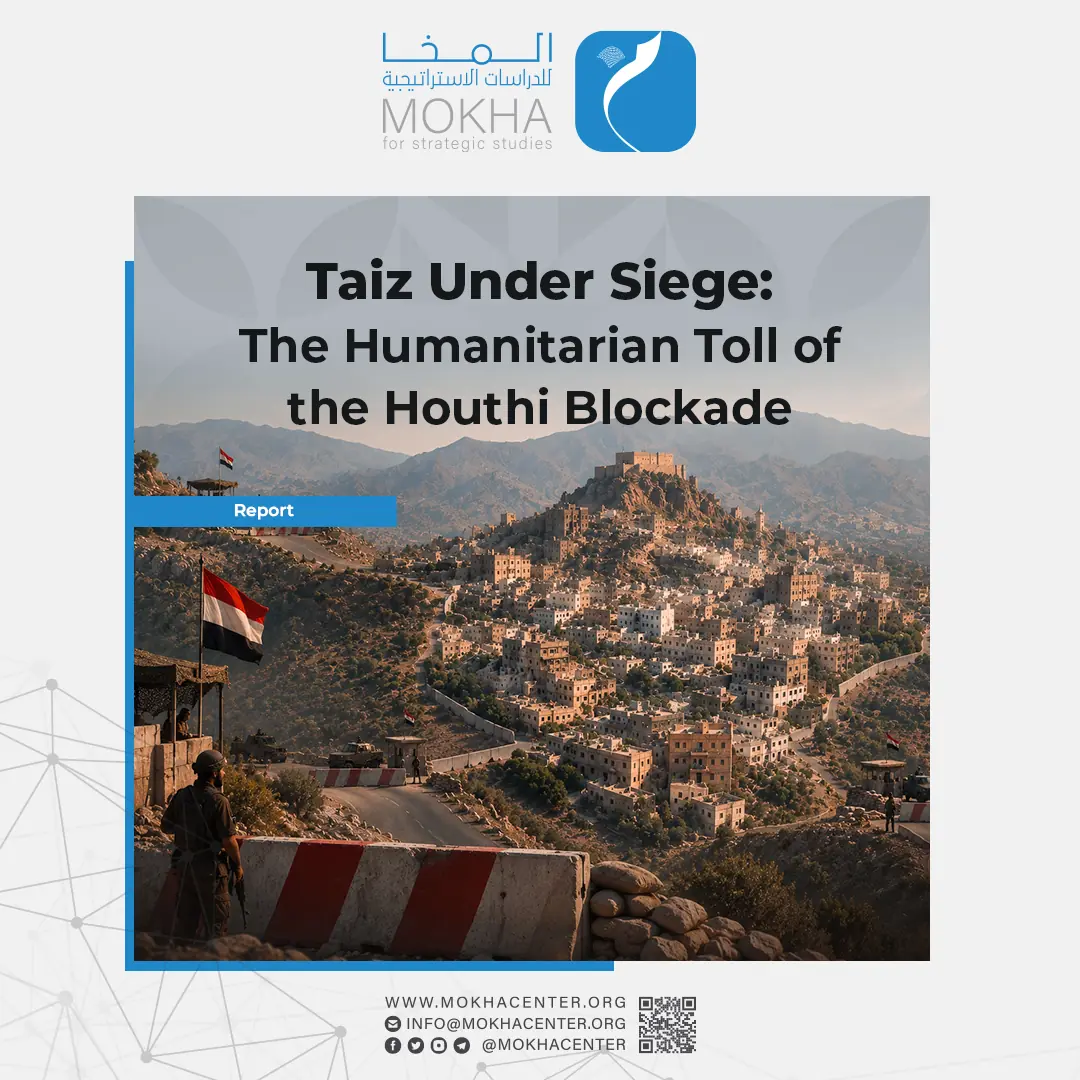
Taiz Under Siege: The Humanitarian Toll of the Houthi Blockade
Introduction
Around 2.8 million people in Taiz and its surrounding areas are facing severe humanitarian conditions after the Houthi group closed the city’s last remaining access route in early October 2026, effectively placing it under siege from all four directions. This marked an extension of a partial siege that had already been imposed from three sides for twelve years. The consequences now directly affect residents’ access to essential services and basic needs, including healthcare, food, and water.
The report notes that international humanitarian law prohibits the starvation of civilians as a method of warfare, and that the Houthi group is violating these obligations by closing the city’s access routes and blocking the delivery of fuel and domestic cooking gas.
This report documents the humanitarian consequences of the siege, the population’s most urgent needs, and the groups most affected. It draws on field interviews with officials involved in the humanitarian response in the governorate and presents practical recommendations to the international community, the United Nations, the International Committee of the Red Cross, donors, and humanitarian partners. These recommendations are intended to support the protection of civilians and ensure the timely delivery of humanitarian assistance. The figures cited in the report reflect estimates provided by local authorities at the time the interviews were conducted.
The report is structured around several key areas. It first examines the scope of the siege, before assessing its impact on essential services and the most vulnerable groups. It concludes with key findings and recommendations, followed by testimonies from officials working on the ground.
A City Being Slowly Strangled
Residents of Taiz and its surrounding areas are living under a tight siege imposed by the Houthi group from all four directions. The restrictions have disrupted regular access to fuel, domestic cooking gas, drinking water, and medicine, leaving essential services increasingly dependent on stocks that are close to depletion. Officials managing the humanitarian response from inside the city warn that these conditions pose a growing threat to civilian lives and safety.
Data collected for this report indicate that the siege has pushed the city to the brink of a broader collapse in essential services. Fuel and gas stations have completely shut down, while the water authority is now able to meet only 8.2% of residents’ needs. Some hospital departments could be forced to suspend operations within days, while current stocks of dialysis supplies are expected to last no more than two to three weeks. With each additional day of the siege, the risks facing patients and other vulnerable groups continue to grow.
Siege from All Four Directions
The siege follows years of restrictions imposed by the Houthi group on the city’s access routes. The group’s closure of the fourth route—the Bir Basha–Al-Dhabab road connecting Taiz to Al-Turbah—has completely isolated the city from its surroundings and restricted civilian movement to an unprecedented degree. Those who enter the city are now unable to leave, while those who leave are unable to return, preventing patients from reaching hospitals and health facilities and workers from accessing their livelihoods.
The siege extends across the districts of Al-Qahirah, Al-Mudhaffar, and Salh within the city, as well as Saber Al-Mawadim, Mashra’a wa Hadnan, and parts of Al-Misrakh district. These areas are home to between 4,200 and 4,250 displaced families—around 29,500 people—many of whom had previously been displaced from Maqbanah and Jabal Habashi, only to find themselves once again caught in a cycle of siege and deprivation.
The situation has been further compounded by a new wave of displacement following the recent takeover of several districts. The relevant executive units responsible for displaced people are still working to determine the number of new arrivals. This is placing additional pressure on already scarce resources and further increasing the vulnerability of displaced families and their need for urgent protection and assistance.
Collapse of Essential Services Under the Siege
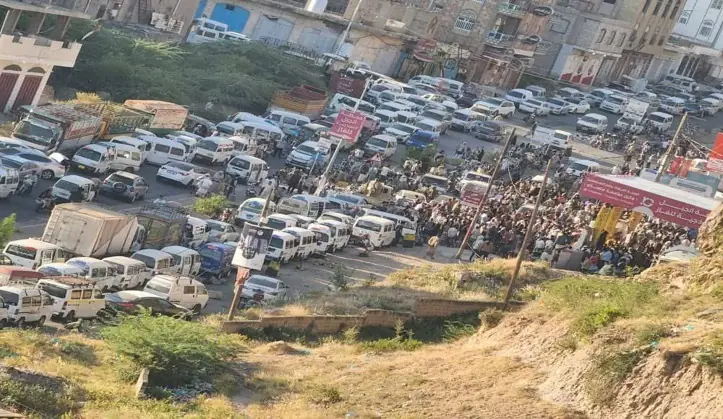
The Houthi group’s restrictions on the entry of fuel derivatives and domestic cooking gas have become the main driver of the collapse of essential services in the city. With fuel and gas stations completely closed and existing stocks nearing depletion, commercial power stations have stopped operating, transportation has been disrupted, and families are struggling to secure the means to cook their food.
This is happening despite the availability of fuel supplies allocated to Taiz in Tur Al-Bahah district in Lahj governorate, which the Houthis continued to prevent from being transported into the city as of the time the interviews were conducted. The fuel shortage has had a direct impact on water supplies, with production falling by around half and the water authority’s coverage of residents’ needs declining from 30% to just 8.2%. As a result, families are increasingly forced to rely on alternative sources that are both costly and unsafe. At the same time, waste has accumulated in densely populated neighbourhoods as sanitation services have come to a halt, increasing the risk of disease outbreaks.
The health sector is also at risk of seeing several hospital departments shut down within days, particularly those serving kidney failure patients. Oxygen production is also under threat, as all three oxygen plants in the governorate depend on diesel and electricity. Health workers are operating under extremely difficult conditions, amid an urgent need for medicines for chronic diseases, intravenous fluids, and surgical supplies.
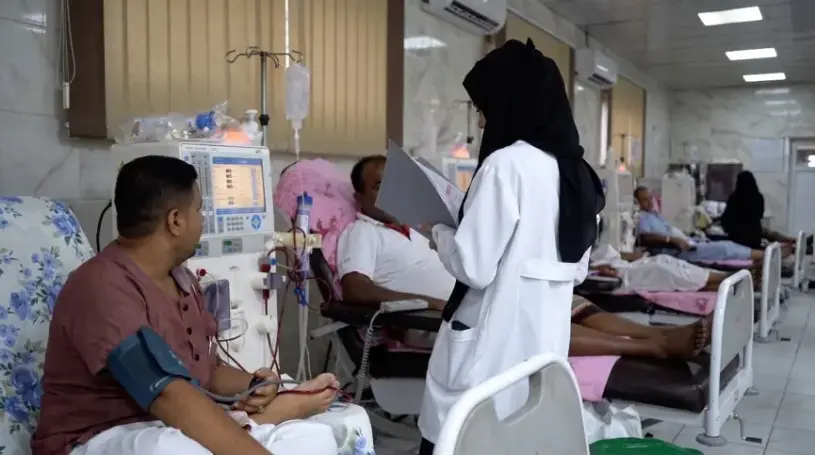
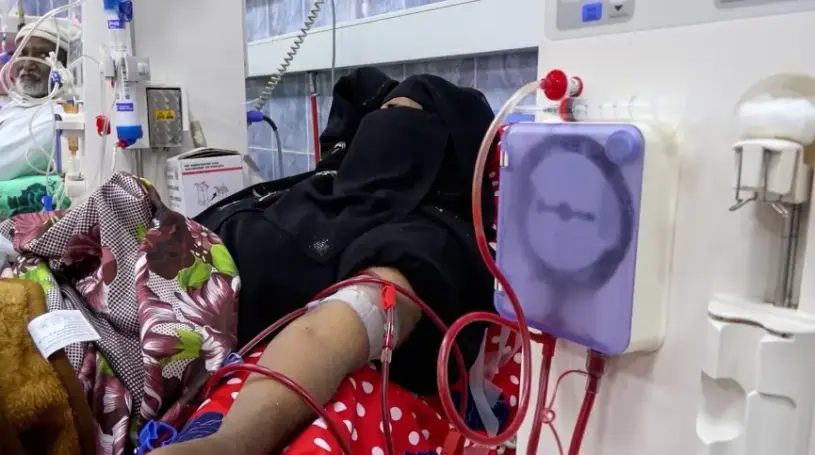
Kidney failure patients are among those facing the greatest risk. Some 270 patients depend on regular dialysis sessions at the Taiz Dialysis Centre, which has been forced to cut session times by half because of diesel shortages. The number of daily dialysis sessions has also fallen from 77 to around 37, as many patients are no longer able to reach the centre.
Between 40 and 50 patients from areas outside the city are also unable to access the centre because of road closures. Patients are meanwhile being forced to purchase saline solutions at their own expense. The centre’s director warns that any suspension of dialysis services could result in the deaths of the vast majority of these patients.
The Siege Is Pushing Taiz Toward Famine
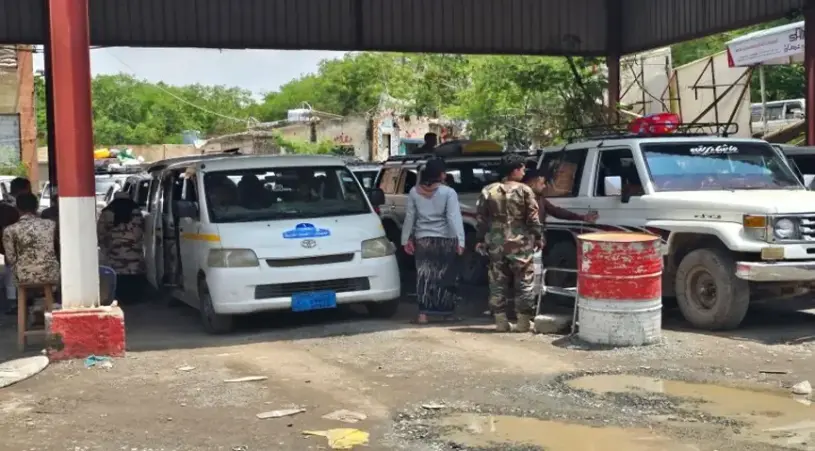
Restrictions imposed by the Houthi group on the entry of food and fuel have driven up the prices of food and petroleum products and led to a complete shortage of domestic cooking gas, weakening families’ ability to meet their basic food needs. The Emergency Committee warns that if the siege continues, the city could face famine, particularly given the limited scale of existing initiatives. These include food supplies such as flour brought in by the Hayel Saeed Anam Group, which remain insufficient to meet the growing gap in needs.
According to field monitoring conducted on 10 October 2026, the price of a 10-kilogram bag of wheat rose from 8,800 rials to 12,000 rials over a two-week period, an increase of around 36%. The price of 10 kilograms of rice increased from 21,000 to 26,000 rials, or around 24%, while the price of a 20-litre container of petrol on the black market jumped from 30,000 rials to around 80,000 rials.
Food insecurity is being further aggravated by the loss of income among thousands of families, particularly those dependent on daily work in bus and motorcycle transport. Fuel shortages have brought these activities to a halt, leaving families to face rising prices and the loss of income at the same time. As a result, they are in urgent need of food and cash assistance.
The Siege Is Pushing the Most Vulnerable to the Brink of Death
The siege imposed by the Houthi group is placing certain groups at particularly severe risk, as their survival increasingly depends on the timely arrival of fuel, medicine, and food. With transport disrupted, roads closed, and medical supplies in short supply, many patients are no longer able to access regular treatment, while poor and displaced families are increasingly unable to meet their basic needs.
Each additional day of the siege therefore poses a direct threat to the lives of people within these groups. They should be given priority in any urgent humanitarian response, with medical and food assistance directed first to those most at risk. These include kidney failure patients whose survival depends on regular dialysis sessions that are now at risk of being suspended; cancer patients and people with chronic illnesses who are struggling to obtain medicines that are increasingly rare in the market; newborns in incubators and patients dependent on oxygen; as well as long-term and newly displaced families, poor households, the wounded, and families that have lost their daily income following the suspension of transport services due to fuel shortages.
Voices from Inside the Siege
Based on the findings outlined above, the following section presents the results of field interviews conducted with city officials. It includes the questions posed and their detailed responses, documenting through figures and firsthand accounts the depth of the humanitarian crisis and the scale of the challenges facing relief, planning, and health sectors in Taiz under the continuing Houthi siege.
Dr. Ilan Abdul Haq, Deputy Head of the Emergency Committee
- How would you describe the humanitarian situation in Taiz under the ongoing siege, and what are its main consequences for the population?
The Emergency Committee, in coordination with the government and humanitarian partners, is monitoring developments, identifying priorities and needs, and coordinating the response according to the resources available in order to confront the deadly siege imposed by the terrorist and criminal Houthi militia. But we must be clear: the scale of the humanitarian catastrophe caused by the Houthis is beyond description, amid shortages of fuel, domestic cooking gas, and food supplies.
- What are the most urgent humanitarian needs in the areas of food, water, health, and medicine?
The most urgent humanitarian needs include providing basic food supplies to the most vulnerable families, securing clean drinking water, ensuring the continuation of health services, and providing medicines, medical supplies, and the fuel needed to keep hospitals and health facilities operating.
In the health sector in particular, there is an urgent need to support emergency departments, operating theatres, and intensive care units, and to provide medicines for chronic diseases, intravenous fluids, and surgical supplies, alongside support for health workers operating under extremely difficult conditions.
- Have you recorded increases in the prices of essential goods or difficulties in getting supplies into the city? How has this affected families?
Yes. Taiz is experiencing rising prices for food and fuel, alongside a complete shortage of domestic cooking gas, as a result of the siege imposed on the city and the limited entry of these supplies.
If the siege continues in this way, hundreds of patients, including kidney failure patients, cancer patients, and children in incubators, will face the risk of losing their lives, with the possibility of rising mortality rates.
- What urgent measures are you calling for to lift the siege and ensure that food, medicine, and humanitarian assistance reach civilians?
We call on the international community, United Nations agencies, and the International Committee of the Red Cross to exert pressure to open safe corridors for the delivery of food, domestic cooking gas, and the fuel needed to operate hospitals, bakeries, and the water authority, and to ensure that the basic needs of Taiz city’s residents are met.
Nabil Jamel, Director of the Planning and International Cooperation Office in Taiz
- What is the scale of humanitarian needs in Taiz under the siege, and which sectors are facing the most severe shortages?
An urgent humanitarian needs plan has been submitted to the government and international organizations, covering the scale of needs, the number of affected families, and the sectors facing the greatest pressure. The plan focuses primarily on water, health, displaced people, and food security, as well as the need to secure reserves of petroleum products and other essential supplies.
As for the siege itself, it affects five main districts and parts of others, including Saber Al-Mawadim, Mashra’a wa Hadnan, part of Al-Misrakh district, as well as Al-Qahirah, Al-Mudhaffar, and Salh within the city. The population currently living in these districts and other affected areas is estimated at around 2.8 million people.
There are also between 4,200 and 4,250 displaced families, with an average of seven members per household. These families had previously been displaced from Maqbanah and Jabal Habashi.
- How has the siege affected the delivery of humanitarian assistance and relief projects to the population?
The closure of roads and the siege have had a direct impact on vital sectors across Taiz governorate, particularly the health sector. The governorate has already faced severe access difficulties for the past 12 years, having been surrounded from three directions before the fourth route was closed this time, leaving the city completely cut off.
Taiz is now facing severe shortages of petroleum products, diesel, and domestic cooking gas, with all fuel and gas stations completely closed. Existing reserves, which had provided a temporary source of supply, have also begun to run out.
Problems have also emerged in securing oxygen cylinders for patients. Although there are three oxygen production plants in the governorate, they depend on electricity and diesel, both of which have become unavailable.
In the water sector, production has fallen to around 50% of its previous level, while the water authority’s coverage of the city’s needs has dropped from 30% to 8.2%, reflecting the scale of the deterioration in water supplies.
Dr. Essam Mahyoub, Director of the Dialysis Centre in Taiz
- How many kidney failure patients are registered at the centre, how many dialysis sessions are carried out each day, and has the number of patients increased recently?
We currently have 270 registered dialysis patients who receive treatment on a regular and continuous basis. This figure does not include patients who used to come from outside the governorate for routine examinations and to complete the necessary preparations for kidney transplants.
We previously carried out around 77 dialysis sessions per day. However, that number has now declined because of the siege imposed on Taiz and the difficulties patients face in reaching the centre.
- How have the siege and road closures affected the delivery of medicines, dialysis fluids, and medical supplies to the centre, and how long will your current stocks last?
The recent developments and the tight siege imposed on Taiz have had a major impact on the health sector. Most dialysis supplies have been unable to reach the centre because of road closures and restrictions on the entry of medical supplies.
Current stocks are sufficient for only two to three weeks, raising concerns over a potential crisis that could threaten the continuation of dialysis services if new supplies do not arrive.
The Ministry of Health provides dialysis supplies, while limited quantities are also available on the local market. However, these are insufficient to meet demand under the continuing siege and the inability to bring new supplies into the centre.
- Do you have figures on the number of patients who have been unable to reach the centre or have had to postpone dialysis sessions because of transport difficulties and rising travel costs?
The siege imposed on Taiz and the closure of roads have prevented around 40 to 50 kidney failure patients from reaching the dialysis centre. These patients come from Shar’ab, Al-Dimnah, Al-Rahidah, Al-Qa’idah, Al-Hawban, Al-Mawasit, Al-Ma’afir, and Jabal Habashi.
They are facing serious difficulties in reaching the centre for the dialysis sessions they need to stay alive because of restrictions on the roads and access routes leading into the city.
- What are the centre’s most urgent needs, what is their estimated cost, and what risks do patients face if the current situation continues?
The dialysis centre’s most urgent need is diesel, followed by dialysis supplies and other medical items, particularly heparin, saline solutions, medical gloves, and medical adhesive tape.
The siege imposed on Taiz has made it increasingly difficult to secure these supplies, as medical deliveries remain blocked and available stocks continue to decline. Patients are now being forced to purchase saline solutions from the market at their own expense, while securing heparin, gloves, and medical adhesive tape has become an urgent requirement to keep the service operating.
The greatest risk is that dialysis is a lifeline for these patients. Any interruption to treatment as a result of the siege or shortages of fuel and medical supplies could lead to the deaths of the vast majority of them. The continuation of the siege and the obstruction of essential supplies therefore threaten the lives of hundreds of patients who depend on regular dialysis sessions.
Recommendations
In light of the serious humanitarian consequences documented in this report, the following urgent recommendations are proposed:
First: To the international community and the United Nations
- Apply firm and sustained pressure on the Houthi group to immediately lift the full siege and reopen all access routes, particularly the Bir Basha–Al-Dhabab road, to ensure freedom of movement and the flow of goods.
- Activate international mechanisms to criminalize the use of civilian starvation and the withholding of fuel and gas allocated to Taiz, as flagrant violations of international humanitarian law.
Second: To the Yemeni government
- Provide exceptional financial and relief support to the Emergency Committee and the Executive Unit to enable them to respond to new waves of displacement and provide essential goods.
- Secure alternative emergency supply routes for petroleum products allocated to the city in order to prevent the complete collapse of essential services.
Third: To the King Salman Humanitarian Aid and Relief Centre, international organizations, and the International Committee of the Red Cross
- The King Salman Humanitarian Aid and Relief Centre should urgently intervene by funding and approving an emergency fuel grant and vital medical supplies, including saline solutions and heparin, for the Taiz Dialysis Centre, to help save the lives of 270 patients who face the risk of death within two weeks.
- Support the water authority and the governorate’s three oxygen plants with alternative energy systems or diesel fuel to improve the critically low water coverage rate of 8.2% and secure hospital needs.
- Expand food safety nets and emergency cash and food assistance for displaced families and households that have lost their sources of income, in order to reduce the growing risk of famine.
Conclusion
The findings and testimonies presented in this report show that Taiz is facing one of its most severe humanitarian crises after the Houthi group imposed a siege from all four directions and closed its last remaining access route. Around 2.8 million people are now effectively cut off from their surroundings and deprived of regular access to fuel, domestic cooking gas, drinking water, food, and medicine.
The siege has become a direct threat to civilian lives. Fuel and gas stations are completely closed, the water authority now covers no more than 8.2% of residents’ needs, some hospital departments are at risk of shutting down within days, and oxygen production is under threat. Meanwhile, 270 kidney failure patients depend on stocks that will last only a few weeks, while displaced and poor families, as well as those who have lost their sources of income, face the growing threat of famine amid rapidly rising prices.
The immediate lifting of the siege, the opening of safe humanitarian corridors, and the regular flow of fuel, food, and medicine therefore represent the minimum measures required to protect civilian lives. An urgent and coordinated response to the recommendations set out in this report remains the most effective way to prevent the humanitarian crisis in Taiz from developing into a catastrophe that will be increasingly difficult to contain.