Killed, Captured, and Missing Houthi Recruitment of Children During the 2026 Military Escalation
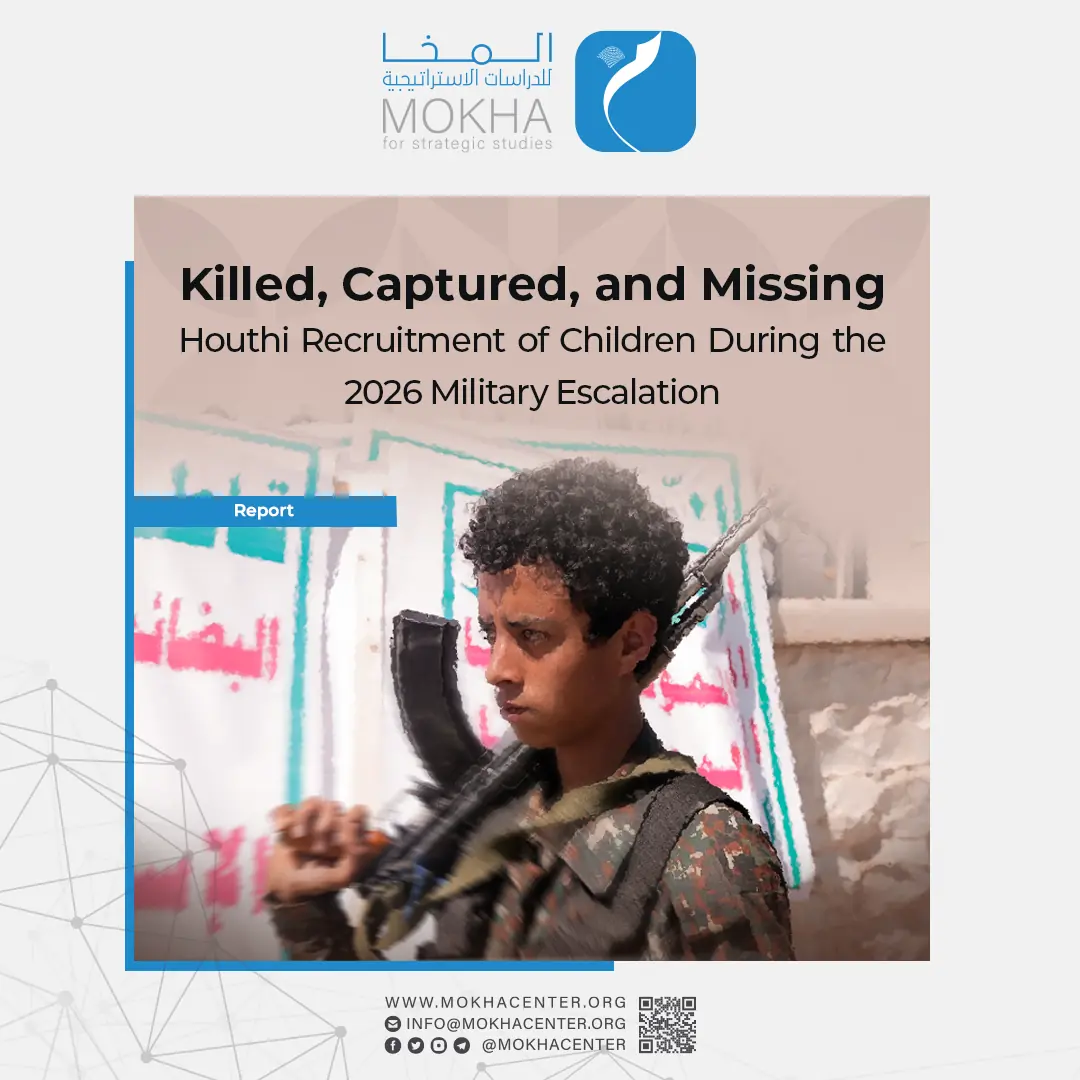
The involvement of children in the armed confrontations that took place in Yemen during September and October 2026 represents one of the gravest consequences of the military escalation triggered by the Houthi group. Field developments during this period revealed the presence of children among fighters participating in the battles, bringing the issue of child recruitment back to the forefront of human rights and humanitarian concerns, particularly given the difficulty of obtaining comprehensive information about their identities, ages, and the circumstances under which they were sent to the frontlines.
On September 30, 2026, Yemen’s Ministry of Human Rights announced that at least 100 children had been killed after, according to the Ministry, being recruited by the Houthi group and sent to combat fronts during the month. The Ministry stated that the figure was based on names, information, and photographs obtained following the children’s deaths, while stressing that the available information did not cover all cases. This coincided with credible reports indicating that child fighters had also been captured on several fronts, raising questions about the ages of these detainees, the areas from which they were recruited, and the actors responsible for sending them into combat.
This report documents cases of children who were killed or captured during the fighting that took place in Yemen in September and October 2026, drawing on official statements and field monitoring. It seeks to compile the available information regarding their ages, places of origin, and the battlefronts on which they appeared.
Fuel for the Houthi War: Killed, Captured, and Missing Children
Field monitoring conducted during the latest fighting along the Red Sea coast and in the highlands of Taiz, Marib, and Al-Jawf in September and October 2026 identified a significant number of children whose families had lost contact with them, alongside cases of children who were killed and others who were captured during the confrontations.
The monitoring included testimonies from the families of missing children, a review of information released by government forces regarding detainees, and comparisons with available official data and human rights reports.
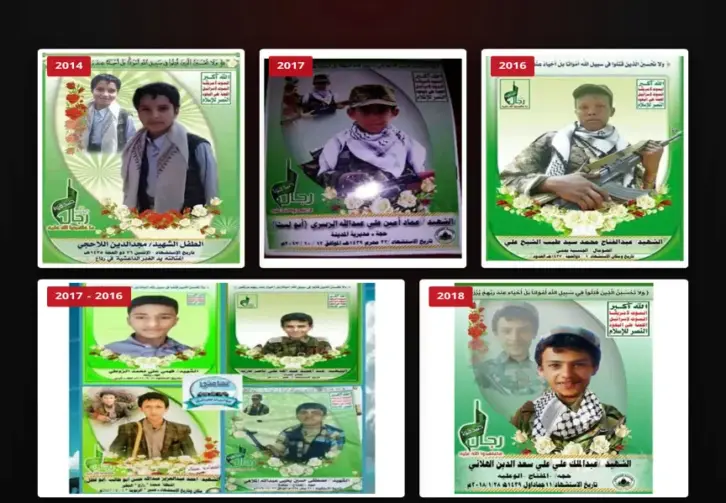
According to testimonies and reliable field sources contacted by the researcher, the Houthi group continues to recruit children and involve them in military operations. The sources documented the deaths and injuries of a number of these children on different battlefronts, as well as the capture of others during the latest confrontations. These findings indicate that the practice remains ongoing despite repeated human rights and international warnings.
In addition to the number of child fatalities announced by Yemen’s Ministry of Human Rights on September 30, an official in the Presidential Office in Aden had earlier told Al Jazeera that the relevant authorities had documented 62 cases of child recruitment during the second quarter of the year in areas under Houthi control.
The two figures differ in both timeframe and the nature of the cases recorded: the first refers to children who were killed, while the second concerns documented cases of recruitment.
Reports from families regarding their missing children remain among the most urgent aspects of the issue. Determining the fate of these children requires cross-checking family testimonies against lists of those killed and captured, as well as verifying names, ages, places of origin, and the battlefronts where the fighting took place.
Figures Reveal the Scale of Houthi Use of Children on the Frontlines
The fighting that took place in Yemen during September and October 2026 indicates that recruited children reached frontline positions across several battlefronts, including Taiz, the western coast, Marib, and Al-Jawf.
Preliminary estimates suggest that between 200 and 250 children may have been killed, captured, or gone missing during these confrontations, in the absence of a comprehensive tally that brings together all cases and verifies the identities and ages of those involved.
The cases were not limited to children killed in combat. They also included children who were captured, some of whom appeared in videos circulated by media outlets, as well as children whose families lost contact with them after they left their home areas for the frontlines.
The recurrence of such cases across multiple fronts indicates that recruitment through mobilization activities ultimately led some children to participate directly in armed confrontations, where they were killed, captured, or disappeared from contact with their families.
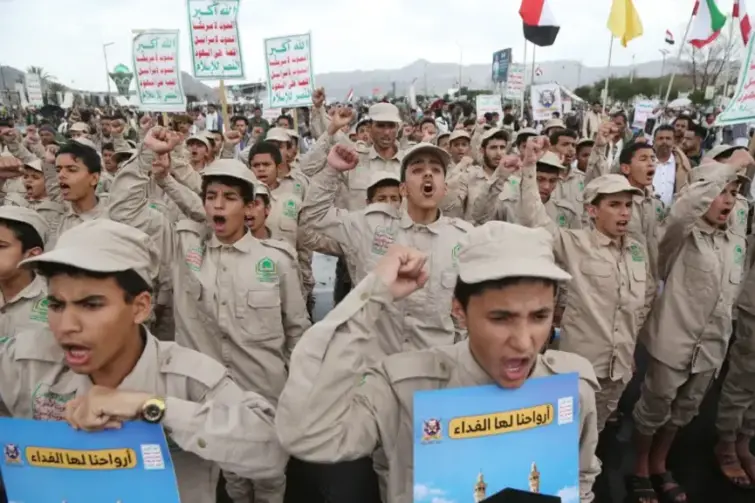
Compiling data on children who were killed, captured, or reported missing into a unified registry, and verifying their ages, identities, and the circumstances of their recruitment, is essential to reaching a more accurate assessment of the scale of children’s involvement in the fighting during this period.
Families Search for Their Children After Losing Contact
Yemeni families are facing growing anxiety and uncertainty over the fate of their children who joined the fighting, after contact with some of them was lost and their families received no confirmed information about whether they had been killed, captured, or remained missing.
The suffering of these families is compounded by the absence of clear data that would allow them to verify the names and fate of children involved in the fighting, particularly given the number of active fronts and the overlapping reports of those killed, captured, and missing.
As a result, some families have resorted to searching for their children through acquaintances and intermediaries, while also monitoring published photographs and videos of fighters taken prisoner. The problem extends beyond the loss of contact itself: families often struggle to obtain reliable information, while the possibility that their children may have been captured or killed remains unresolved.
These cases reveal another dimension of the humanitarian cost of child recruitment. The consequences do not end when children are sent to the frontlines; they extend to their families, who remain suspended between waiting for confirmed news and fearing the arrival of tragic information.
What Video Footage Reveals About Child Fighters and Captives
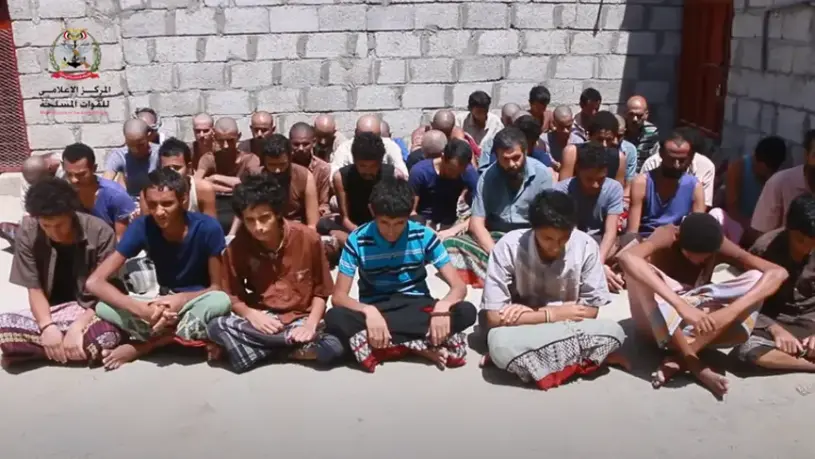
During the recent fighting, Yemen’s armed forces and the Popular Resistance released video footage showing children participating in combat alongside Houthi forces, as well as other children who were captured during the confrontations. A review of these videos reveals recurring patterns across many of the cases. The children often appear disoriented and confused, giving fragmented and inconsistent answers when asked why they were at the front or who had sent them there. Fear is also clearly visible in their expressions and voices, particularly among those taken prisoner and facing an uncertain fate.
The footage also suggests that many of the children have little understanding of the purpose of the fighting. Some simply repeat mobilization slogans and phrases they appear to have been taught, without demonstrating a clear grasp of their meaning, while others are unable to explain why they became involved in the battles. This raises serious concerns that their presence on the frontlines was not the result of an informed decision, but rather of recruitment and mobilization practices that exploited their young age and limited awareness.
These videos provide a visual record that reinforces the broader picture emerging from available figures and field testimonies regarding the involvement of children in combat.
Poverty as a Gateway to Child Recruitment
Against the backdrop of worsening living conditions facing Yemeni families, economic hardship can create conditions that make children more vulnerable to recruitment. The Houthis are reported to take advantage of families’ need for income and basic necessities, particularly where households are increasingly unable to meet their children’s needs.
Recruitment may take the form of financial incentives or promises of support for the family. In some cases, participation in mobilization centers may initially be presented as educational or cultural activity, before some children are subsequently directed toward the frontlines.
Child recruitment therefore cannot be separated from the economic pressures surrounding vulnerable families. Material need can become a point of vulnerability that is exploited to influence both children and their relatives. The danger of this approach lies in the fact that it does not target the child alone, but also takes advantage of the broader fragility of the household.
Addressing the phenomenon consequently requires documenting recruitment methods, identifying cases in which economic hardship has been exploited, and providing alternatives that reduce children’s vulnerability to involvement in the conflict.
Filling Gaps in the Fighting Ranks
The recruitment of children is also used as a means of reinforcing Houthi ranks on the battlefield, with children drawn into direct participation in hostilities despite their young age and limited ability to comprehend the risks of war.
The dangers extend beyond the immediate threat of death, injury, or capture. Participation in armed conflict can also deprive children of education and a normal childhood, while exposing them to experiences that may have lasting psychological and social consequences.
Their involvement in combat also imposes additional costs on families and communities, beginning with uncertainty and fear over their fate and, in some cases, ending with their death, long-term injuries, or the enduring consequences of exposure to violence.
This exploitation becomes even more serious when children are treated as a means of replacing fighters lost in battle or replenishing the frontlines with new recruits, rather than as a vulnerable group entitled to protection. Every child sent into combat is deprived of opportunities for education and a normal life, while recruitment also undermines families’ ability to protect their children’s future and expands the circle of those harmed by the war.
The consequences of this practice therefore do not end when the fighting stops. Helping affected children return to normal life requires psychological and social rehabilitation, the restoration of educational opportunities, and protection against renewed recruitment, alongside accountability for those responsible for recruiting children and sending them into combat.
Abduction and Coercion into Fighting
Methods of child recruitment attributed to the Houthis extend beyond recruitment through mobilization centers and financial inducements. Reports from Yemeni families have also raised concerns that some children may have been subjected to pressure, coercion, or taken to battlefronts against their will.
Such practices become particularly serious when children are prevented from communicating with their families or are transferred to areas far from their homes, making it difficult for relatives to determine their whereabouts or intervene to secure their return.
Testimonies from families who have lost contact with their children are therefore important in identifying such cases, particularly when cross-checked against information from the frontlines and data concerning captured or missing children. However, determining whether individual cases involved abduction or forced participation in combat requires careful documentation that distinguishes verified incidents from reports that still require further investigation, so that cases of coercion are not conflated with other forms of recruitment.
Any cases in which the Houthis are found to have forced children to join the frontlines warrant investigation and accountability, as well as measures to establish the children’s fate, return them to their families, and prevent their continued exploitation in armed conflict.
Conclusion
The recent fighting has exposed some of the consequences of the Houthi group’s recruitment of children and their deployment to the frontlines. Children have been killed, others have been captured, while the whereabouts of some who were sent to battlefronts remain unknown.
The group bears responsibility for recruiting these children, exposing their lives to danger, and removing them from education and their family environment to involve them in a war that is incompatible with their age and beyond their ability to fully understand its consequences.
The losses are not limited to those killed in battle. They extend to families who remain uncertain about the fate of their children, as well as to children who may return with physical injuries or psychological trauma that can hinder their reintegration into normal life.
These cases show that the continued recruitment of children adds another category of victims to Yemen’s war: children who should have been in schools and with their families rather than on the frontlines.
The immediate priorities remain establishing the fate of missing children, identifying those held in captivity, documenting recruitment cases, holding those responsible to account, ending the recruitment of children, and returning them to their families. Sending children into combat does not only affect the course of fighting; it leaves a deep wound in Yemeni society whose consequences may endure long after the war itself has ended.
