A Generation Out of School How the Houthi Siege Destroyed Educational Opportunities in Taiz
العربية : Read this article in
Key Figures
| 520,000
students denied access to education |
119
educational facilities damaged in October |
21
schools the Houthis turned into barracks |
| 26
affected educational facilities documented in detail |
68
students killed or wounded in October |
15
university students killed since September |
Executive Summary
This report documents how the Houthi military escalation in September 2026 has affected education in Taiz Governorate. It draws on field monitoring by the Mokha Center for Strategic Studies from October to early November 2026 and on data from the Ministry of Education.
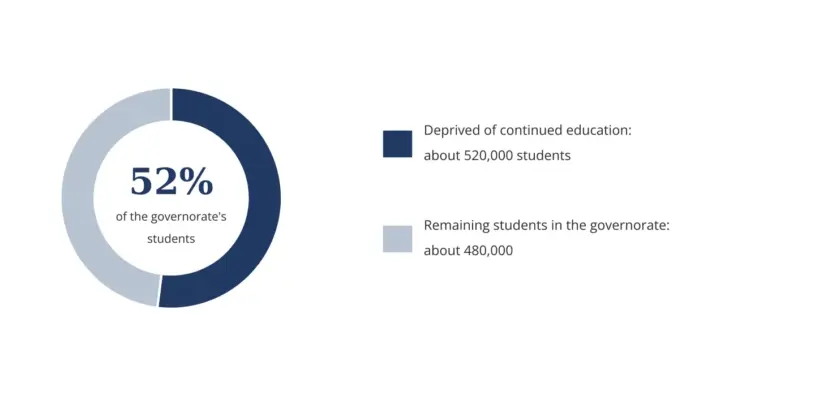
According to the ministry, the escalation has prevented some 520,000 students in the city and in Houthi-controlled areas from continuing their education. They account for more than half of the nearly one million students in Taiz. On 5 November, local authorities announced that school and university classes had stopped across the city.
The monitoring team documented shelling of schools and found that Houthi forces had turned schools in rural areas into barracks. In the city, fuel shortages and road closures left students unable to reach their schools and universities. Rising prices forced some families to put other needs ahead of their children’s education. The team could not conduct a school survey because it was unable to reach Houthi-controlled areas or areas where fighting continued.
Key Findings
- Some 520,000 students in Taiz, more than half the total, are out of the classroom.
- In October alone, 119 educational facilities sustained damage. Of these, 88% were in five districts under full Houthi control. By early November, the monitoring team had documented the damage in detail at 26 facilities, including Al-Turbah University and the Health Institute.
- Houthi forces stormed 21 schools and turned them into barracks and command posts. They also abducted educators and pressured schools to recruit students. In Bani Yusuf, a subdistrict of Al-Mawasit, each school was told to provide 50 students for recruitment.
- In October, 68 students were killed or wounded. Since the escalation began, 15 university students have been killed.
- Schools remain closed in parts of Al-Misrakh District where fighting continues and in villages on Jabal Sabir that remain under shelling. In one of those villages, Al-Najd, shelling hit Omar al-Tayyar School on 22 October.
Empty Classrooms in Taiz
The 2026–27 school year began on schedule. Two weeks later, public and private schools in the city’s three districts of Al-Mudhaffar, Al-Qahirah and Salah closed after shell fragments struck several schools. Classes resumed on 6 October by order of Abdulwase Shaddad, director of the Education Office, who said that “the safety of students, teachers and administrative staff comes first.” Classes lasted just four days. On 10 October, the Education Office suspended classes in all schools across Taiz. Shaddad cited “the continued shelling and the fear it has caused among students.”
On 8 October, the Emergency Committee suspended classes at schools, institutes and universities in Houthi-controlled districts. On 13 October, Taiz University suspended classes across its faculties and centres.
On 26 October, Deputy Minister of Education Dr Ali al-Abab said that some 520,000 of the nearly one million students in Taiz had been unable to continue their education. The figure covers students in the city and in Houthi-controlled areas and includes those in public and private schools. The published figures give no breakdown by urban and rural area.
Most school buildings in the city remained standing, but shelling and the loss of transport kept students from attending. In rural districts under Houthi control, schools sustained damage or were used for military purposes. By the end of October, students had missed nearly two months of the first term.
Schools Remain Closed in Al-Misrakh and Jabal Sabir
Al-Misrakh District and the villages of Jabal Sabir lie along the front lines south of the city. Their schools have remained closed since classes were suspended on 10 October. In Al-Aqroud, a subdistrict of Al-Misrakh, fighting has continued since late October on the outskirts of Dubba village and in the areas of Al-Dhunayb and Al-Karif. Houthi forces have shelled villages there with tanks and mortars.
On 2 November, a missile fired by Houthi forces struck Al-Najd market in the Al-Makhjaf area, killing 13 people and wounding 30. Women and children were among the casualties. That same day, a Houthi sniper wounded two children in Al-Maqda, one aged ten and the other two.
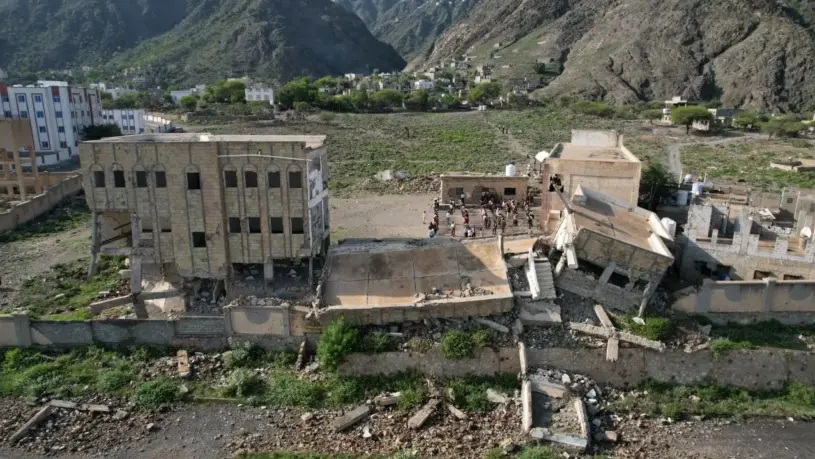
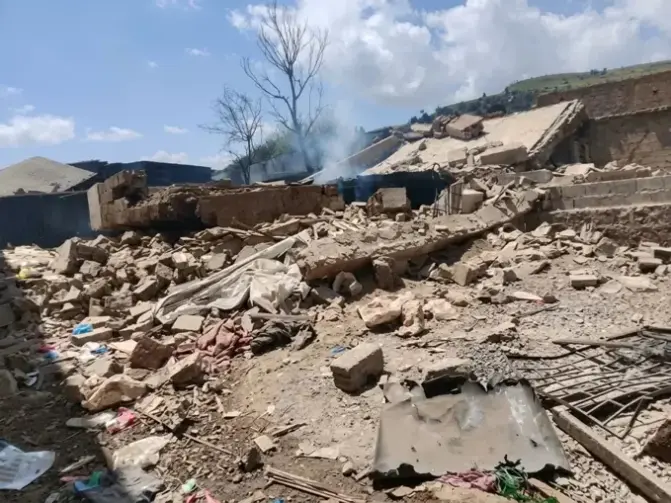
On 22 October, Houthi forces shelled Omar al-Tayyar School and the adjoining mosque in Al-Najd village on Jabal Sabir, then attacked them with a drone. Both buildings sustained extensive damage. Secondary school students in the mountain villages now take classes through a distance-learning platform set up for Mashra‘a wa Hadnan District. Students in basic education still have no alternative.
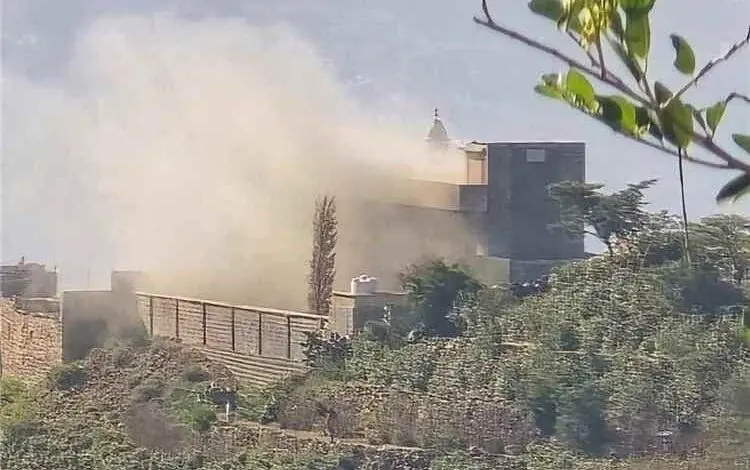
Photo 2. The Houthi forces shelled Omar al-Tayyar School and the mosque in Al-Najd village on Jabal Sabir, 22 October 2026.
Table. Closed schools in Al-Misrakh, Sabir al-Mawadim and Mashra‘a wa Hadnan districts
| No. | School | Locality | District |
| 1 | Abdullah ibn Umar School | Jara | Al-Misrakh |
| 2 | Al-Furqan School | Al-Kashrar | Al-Misrakh |
| 3 | Al-Falah School | Anbyan | Al-Misrakh |
| 4 | Al-Ta‘awun School | Watir | Al-Misrakh |
| 5 | 7 July School | — | Al-Misrakh |
| 6 | Al-Nasr School | Al-Mimshah | Al-Misrakh |
| 7 | Martyr Ahmed Mahmoud School | Jaba’ | Al-Misrakh |
| 8 | Al-Ahd al-Jadid School | — | Al-Misrakh |
| 9 | Al-Irfan School | Akamat Hubaysh | Al-Misrakh |
| 10 | Al-Salam School | Taluq | Al-Misrakh |
| 11 | Mohammed Taha Naji School | Al-Haza | Sabir al-Mawadim |
| 12 | Martyr Ali Jamil School | — | Sabir al-Mawadim |
| 13 | Al-Bara’ ibn Malik School | — | Sabir al-Mawadim |
| 14 | Al-Irshad School | Say‘a | Sabir al-Mawadim |
| 15 | Ibrahim Aqil School | Hubayl Salman | Sabir al-Mawadim |
| 16 | Al-Afaq School | Al-Mulayha’ | Sabir al-Mawadim |
| 17 | Mu‘adh ibn Jabal School | Al-Daym | Sabir al-Mawadim |
| 18 | Anas ibn Malik School | — | Sabir al-Mawadim |
| 19 | Al-Uruba School | Bardad | Sabir al-Mawadim |
| 20 | Al-Nur School | Al-Sha‘b | Sabir al-Mawadim |
| 21 | Huddah School (13 June) | — | Sabir al-Mawadim |
| 22 | Imam al-Shafi‘i School | — | Sabir al-Mawadim |
| 23 | Al-Miqdad ibn Amr School | Al-Qurayn | Sabir al-Mawadim |
| 24 | Al-Bayan School | Al-Majarin | Sabir al-Mawadim |
| 25 | Khalid ibn al-Walid School | Al-Dhabab | Sabir al-Mawadim |
| 26 | Salah al-Din School | — | Sabir al-Mawadim |
| 27 | Al-Fawz School | Al-Aduf | Sabir al-Mawadim |
| 28 | Al-Ma‘rifa School | — | Sabir al-Mawadim |
Damage to Educational Facilities
Between 1 and 31 October 2026, field monitors recorded damage to 119 educational facilities across seven districts, including Al-Turbah University and the Health Institute. Houthi shelling left some school and university buildings partially damaged and others completely destroyed, preventing students from returning to class. In Al-Qahaf subdistrict of Jabal Habashi, shelling destroyed the buildings of Al-Zahra School. In Taiz city, schools closed after fragments from Houthi shells struck several of them.
Field monitors recorded 32 damaged facilities in Al-Shamayatayn, 25 in Jabal Habashi, 22 in Al-Mawasit, 20 in Al-Ma‘afir, nine in Al-Misrakh, six in Sami‘ and five in Al-Silw.
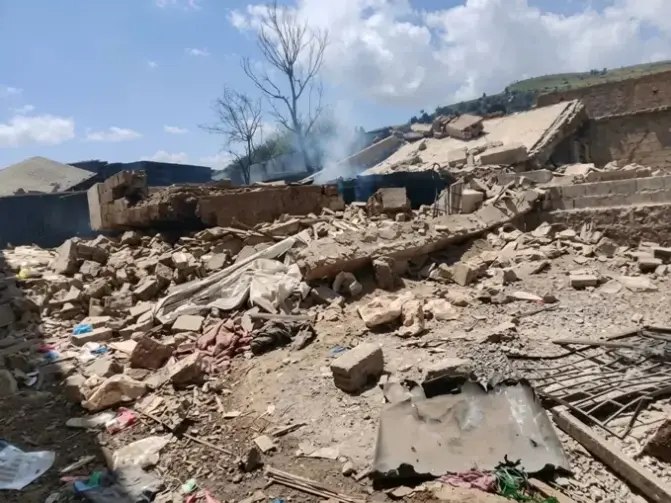
Houthi forces also took over school premises. On 3 November, they turned Anas ibn Malik School in the town of Al-Turbah into a barracks after forcing residents of the surrounding neighbourhood from their homes.
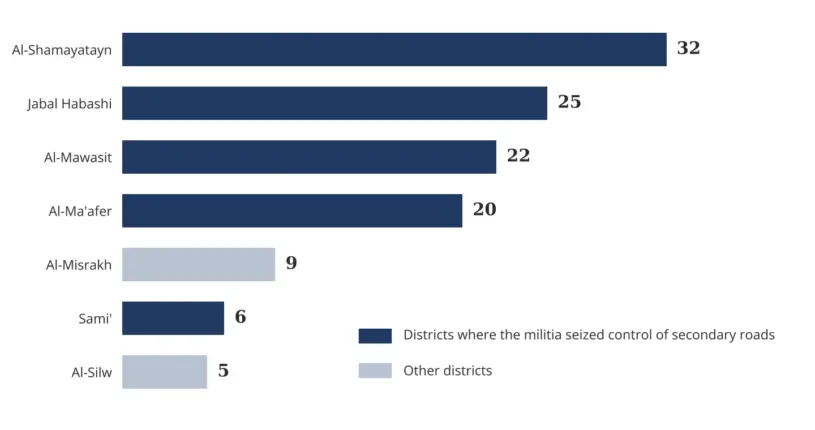
Of the 119 damaged facilities, 105 were in the five districts the Houthis had taken control of (Al-Shamayatayn, Jabal Habashi, Al-Mawasit, Al-Ma‘afir and Sami‘). Al-Shamayatayn alone accounted for 32, including Al-Turbah University and the Health Institute. Both serve students from across the districts of Al-Hujariyah
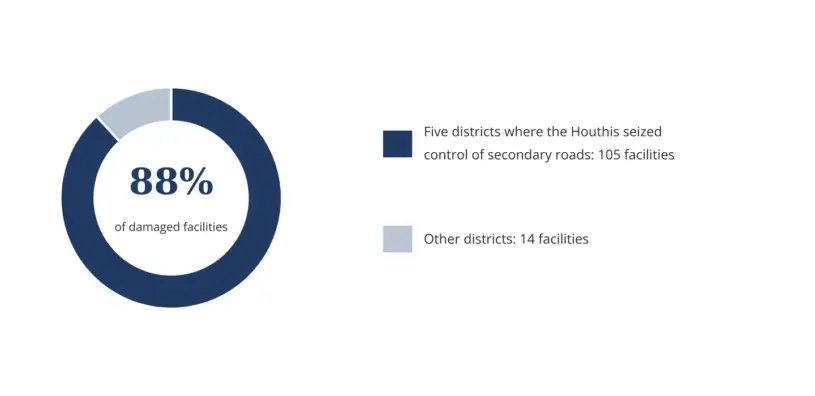
Damaged Educational Facilities
Field monitors identified 23 schools that Houthi shelling had damaged or destroyed in districts of western and southern Taiz. By early November, the monitoring team had documented 26 facilities in detail, including those 23 schools, Al-Turbah University, the Health Institute and Anas ibn Malik School.
Educational facilities affected by Houthi shelling or military use
| No. | Educational facility | Locality or district | Damage or military use |
| 1 | Al-Tashih School | Jabal Habashi | Partial or total damage |
| 2 | Al-Siddiq School | Jabal Habashi | Partial or total damage |
| 3 | Al-Zahra School | Al-Qahaf, Jabal Habashi | Destroyed |
| 4 | Karim School | Al-Wazi‘iyah | Partial or total damage |
| 5 | Al-Jil al-Jadid School | Mawza‘ | Partial or total damage |
| 6 | Sarnit School | Sami‘ | Partial or total damage |
| 7 | Ukhayyah School | Al-Shamayatayn | Partial or total damage |
| 8 | Al-Humaydi School | Al-Shamayatayn | Partial or total damage |
| 9 | Al-Tadamon School | Al-Shamayatayn | Partial or total damage |
| 10 | Tuyur al-Jannah Private School | Al-Turbah, Al-Shamayatayn | Partial or total damage |
| 11 | Anas ibn Malik School | Al-Turbah, Al-Shamayatayn | Converted into barracks |
| 12 | Al-Turbah University | Al-Shamayatayn | Damaged |
| 13 | Health Institute | Al-Turbah, Al-Shamayatayn | Damaged |
| 14 | Al-Faruq School | Bani Umar | Partial or total damage |
| 15 | Al-Najah School | Bani Umar | Partial or total damage |
| 16 | Ammar ibn Yasir School | Al-Ma‘afir | Partial or total damage |
| 17 | 26 September School | Zakirah | Partial or total damage |
| 18 | Al-Atfal School | Zakirah | Partial or total damage |
| 19 | Fajr Sadan School | Sadan | Partial or total damage |
| 20 | Khalid ibn al-Walid School | Al-Ufayrah | Partial or total damage |
| 21 | Salah al-Din School | Al-Rahbah | Partial or total damage |
| 22 | Tariq ibn Ziyad School | Al-Sharajah | Partial or total damage |
| 23 | Al-Sab‘in School | Bin Khawlan | Partial or total damage |
| 24 | Al-Manar School | Al-Haql | Partial or total damage |
| 25 | Al-Falah School | Al-Matali | Partial or total damage |
| 26 | Omar al-Tayyar School | Al-Najd village, Jabal Sabir | Hit by shellfire and a drone strike |
Military Use of Schools
According to field reports, Houthi forces stormed 21 schools from early October onwards and turned them into barracks and command-and-control centres. These included Al-Nasr School in Al-Jabziyah subdistrict of Al-Ma‘afir and Khalid ibn al-Walid School near Al-Rubu‘ market in Al-Maqatirah. On 3 November, Houthi forces forced dozens of families living around Anas ibn Malik School in Al-Turbah to leave their homes so they could use the school as barracks and train their fighters there. Neighbourhood shops closed after the residents were forced out.
In early November, Houthi representatives met with community leaders and education officials in districts the group had recently taken over to discuss reopening schools under its administration. Parents fear the group will use the schools to recruit their children to fight and teach the malazim, a collection of booklets containing transcripts of lectures by Hussein Badr al-Din al-Houthi that the group draws on for its ideology and religious doctrine.
In Al-Shamayatayn, activists wrote to the parents’ council and the head of the district Education Office, Adnan al-Sharjabi, objecting to pressure on him to issue a statement announcing the resumption of classes.
Abduction of Educators and Recruitment of Students
On 22 October, the Al-Shamayatayn District Education Office issued a statement condemning the abduction of education officials and staff, raids on educators’ homes and searches of schools. The office said these actions had kept students away from school.
On 7 November, Houthi forces abducted Mohammed Abduljalil al-Mujahid, the former headteacher of Ma‘in School in Al-Qahaf subdistrict of Jabal Habashi, after he returned home from displacement. They had earlier abducted Mansour Abduljalil Yahya, a teacher, and his son from their home in Jaba’, Al-Misrakh. Another teacher, Tawfiq Ahmed Abdullah, and his son were taken from their home. They were among 11 civilians abducted on 4 and 5 November.
Local sources told the monitoring team that Houthi forces required teachers in Shar‘ab al-Rawnah and Shar‘ab al-Salam to attend military training. They instructed headteachers to press ninth-grade and first-year secondary students, aged 14 and 15, to join the training and threatened to fail students who refused. In Bani Yusuf subdistrict of Al-Mawasit, each school was told to provide 50 students for recruitment. In districts under their control, the Houthis are pressing the heads of schools, institutes and university branches to resume classes so they can recruit students and use schools to mobilise support for the fighting.
Casualties Among Children and Students
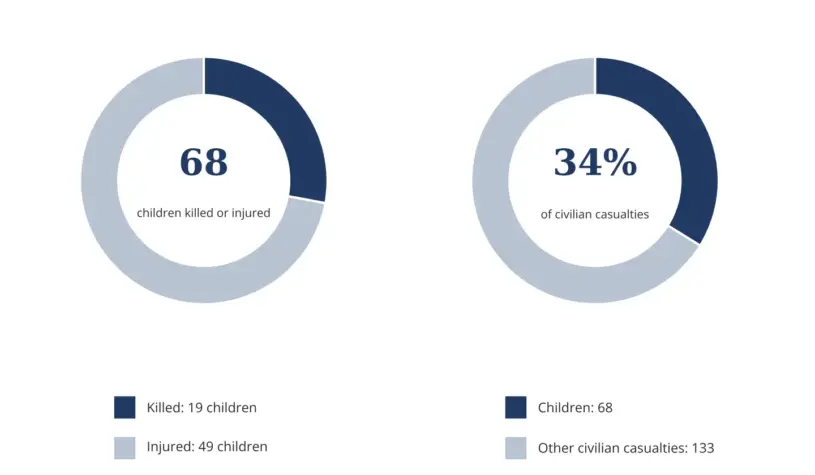
Houthi shelling and sniper fire killed 19 students and wounded 49 in Taiz in October alone. The 68 students accounted for roughly a third of all civilian casualties that month (54 killed and 147 wounded), an average of more than two student casualties a day.
According to a preliminary tally from the university’s media office, Houthi fire has killed 15 university students since the escalation began in September. On 2 November, a Houthi sniper wounded two students in Al-Maqda, Al-Misrakh.
Distance Learning
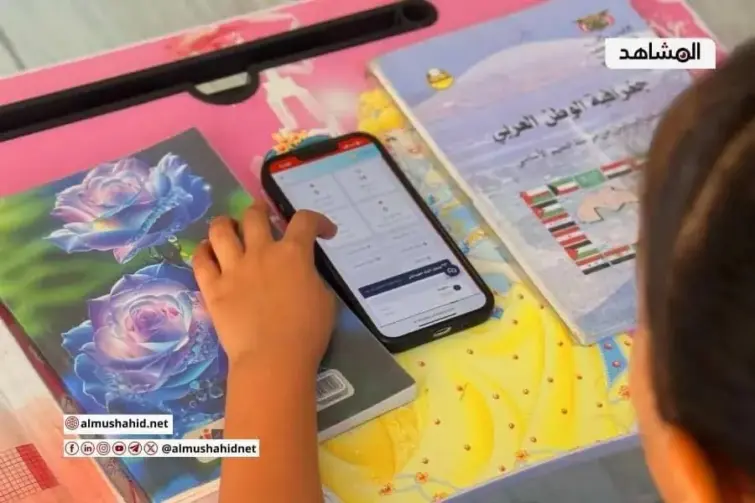
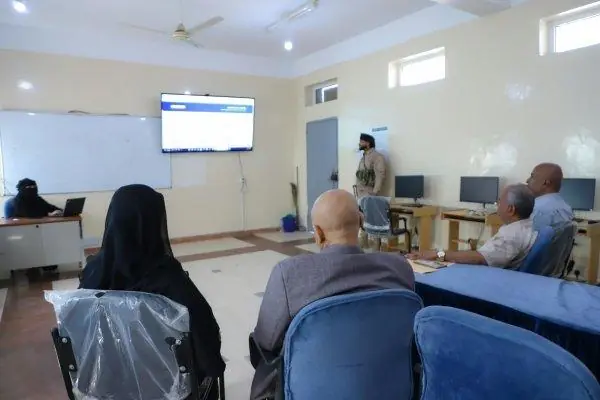
On 5 November, the governor of Taiz, Nabil Shamsan, launched a distance-learning programme at Martyr Ni‘ma Rassam Girls’ School. Abdulwase Shaddad, director of the Education Office, said the programme would begin with three schools, each hosting an online platform. The platforms serve Al-Qahirah, Salah and Mashra‘a wa Hadnan districts. The programme offers secondary school students free classes from 8 a.m. to 6 p.m. through Zoom, Google Meet and WhatsApp groups. The governor directed the office to expand the programme across the city and into rural areas.
The Education Office had already piloted the programme at the same school. Preparations began on 17 October, and lessons started on 20 October, with three 45-minute classes a day.
In neighbourhoods such as Bir Basha and the Old Airport area, internet access is unreliable or unavailable. Some teachers and parents also have reservations about distance learning. The programme has yet to reach students in basic education, who make up the majority of those out of school.
Conclusion
The Houthi siege and the military escalation that began in September 2026 have kept more than half of all students in Taiz out of the classroom. In rural areas, Houthi forces have shelled schools or turned them into barracks. In the city, road closures and the loss of transport have left students unable to reach their schools. For families facing rising prices and insecurity, keeping their children in school has slipped down the list of priorities.
Houthi forces have also abducted educators, pressured schools to hand over students for recruitment and sought to reopen schools under their control to mobilise students and promote an extremist sectarian ideology. Distance learning still reaches only secondary school students in three districts, where internet access is often unreliable or unavailable. Students in basic education, who make up the majority of those out of school, still have no alternative.
Unless the siege is lifted, roads reopen and Houthi forces stop attacking schools and using them for military purposes, an entire generation in Taiz risks growing up outside the classroom. The legitimate government , local authorities and organisations working in education and child protection must act urgently. The report makes seven recommendations.
- Protect schools from attack and military use. Bring local and international pressure to bear on the Houthis to lift the siege, reopen roads, stop shelling schools and withdraw from those they have turned into barracks, in line with the Safe Schools Declaration and international humanitarian law.
- Address student recruitment and the abduction of educators. Refer documented cases to the UN Monitoring and Reporting Mechanism, press for the release of abducted teachers and inform families of the risks students face in Houthi-run schools.
- Provide an immediate alternative for students in basic education. Set up temporary classes in neighbourhoods and at safe centres for displaced families. Distribute printed learning materials and broadcast lessons on the radio.
- Expand distance learning and address barriers to access so the programme reaches students in the remaining districts and rural areas. Provide free internet access points and data packages for learning. Record lessons so students can watch them offline.
- Adopt an emergency plan to salvage the school year. Revise the academic calendar, condense the curriculum and recognise only government-issued certificates. Ensure teachers receive their salaries and incentive payments.
- Secure emergency donor funding for education and the costs of keeping children in school. Fund repairs to damaged facilities, temporary classrooms in areas affected by displacement or fighting, and devices and internet access for distance learning. Funding should also cover school supplies, teacher incentives, transport for students and teachers, and psychological support for students affected by the war. With prices and rates of acute malnutrition rising, provide school meals and cash assistance to the poorest families to help them keep their children in school.
- Complete the documentation of violations. Create a single database of violations against schools, students and educators to help hold those responsible to account.