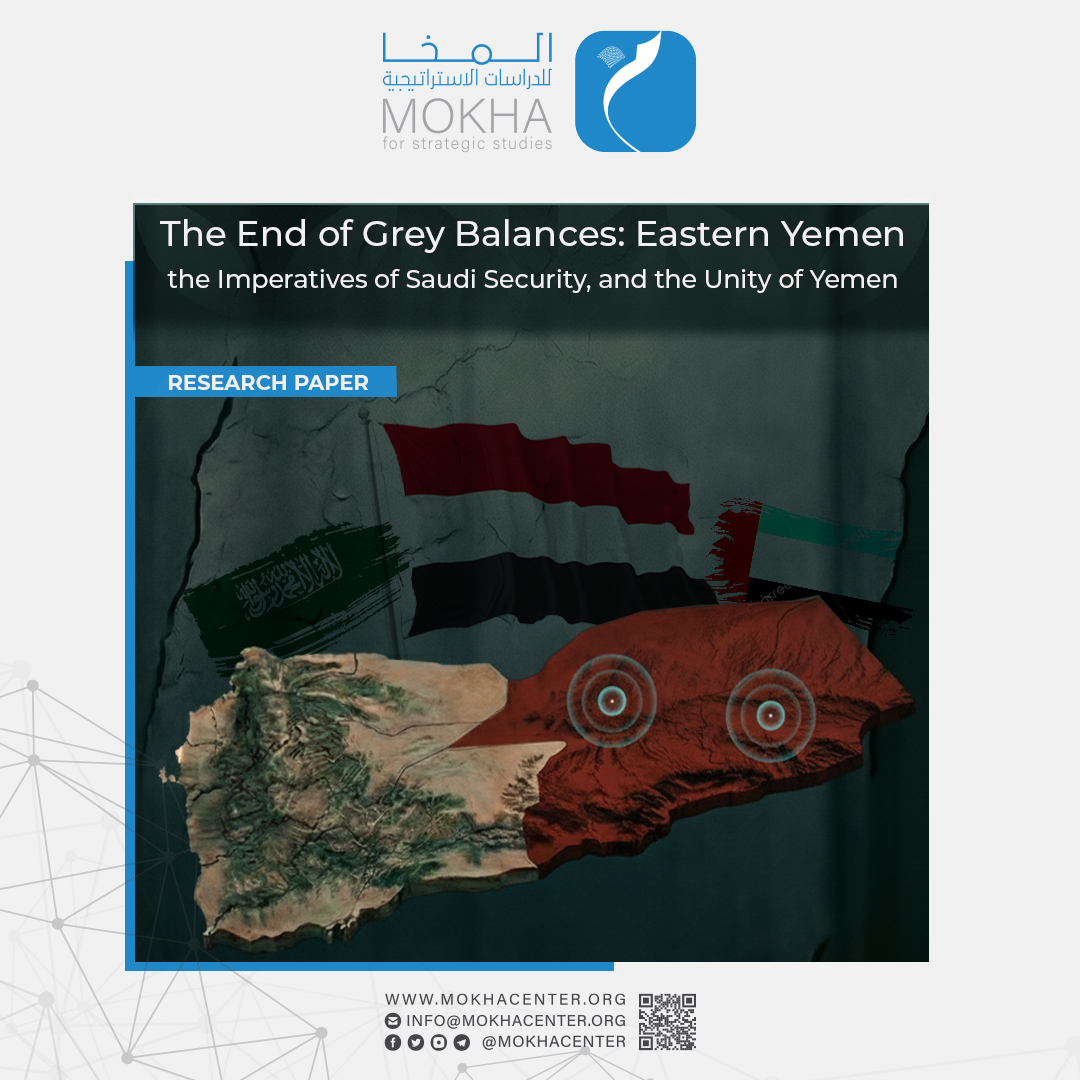
The End of Grey Balances: Eastern Yemen, the Imperatives of Saudi Security, and the Unity of Yeme
Introduction
The developments that unfolded in Hadhramaut governorate in late 2025 and early 2026 marked a pivotal turning point in the trajectory of the Yemeni conflict and in the nature of regional interactions within the Arab Coalition. The governorate moved from being an arena of managed competition to a theater of decisive on-the-ground outcomes that reshaped the balance of power and imposed new security equations.
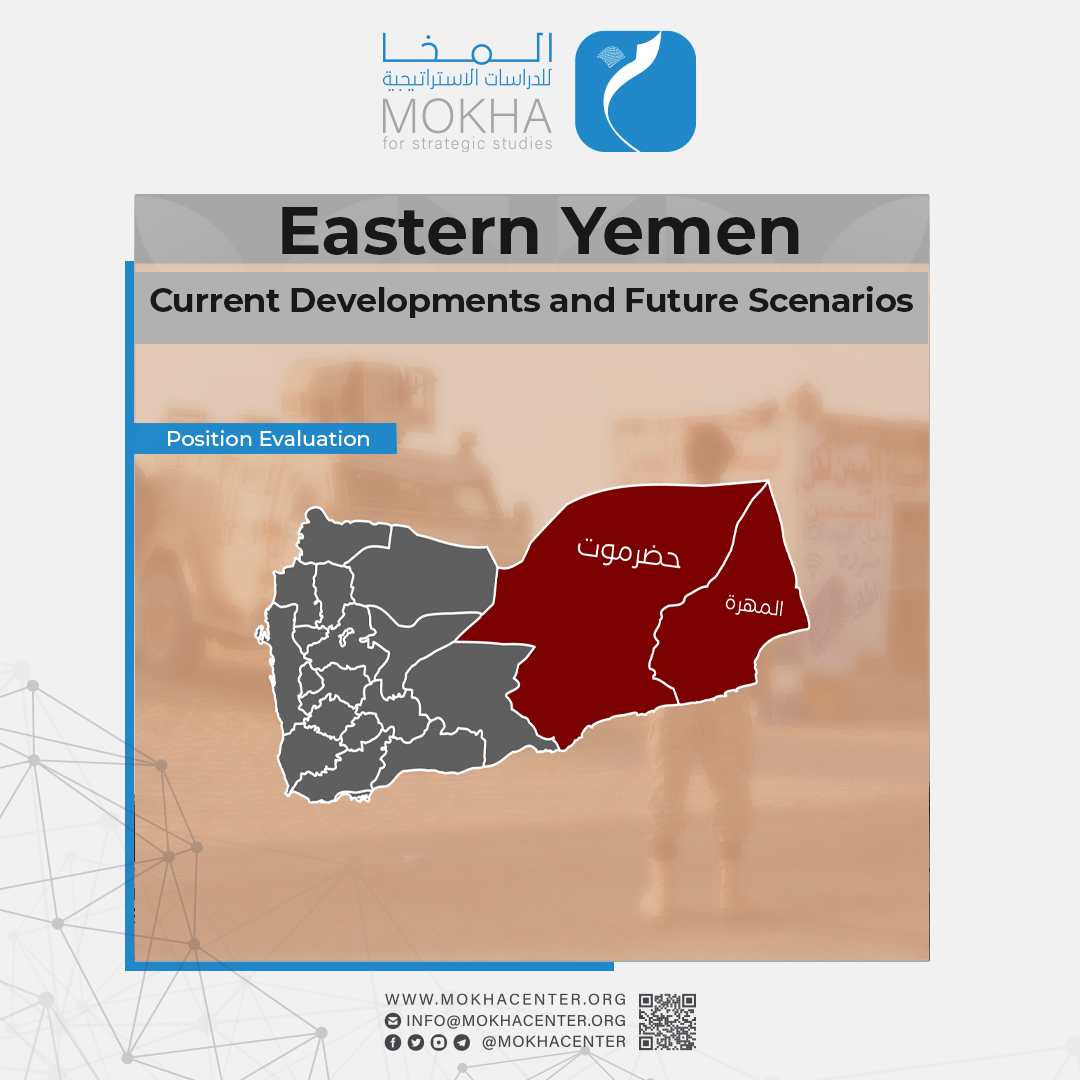
In this context, this paper examines the transformations that took place in eastern Yemen — particularly in Hadhramaut and Al-Mahra — as the result of a complex interaction between Saudi-Emirati competition, the dynamics of the Yemeni conflict, and regional security considerations. It focuses on the shift from competition to the moment of Emirati withdrawal, and the accompanying escalation on the ground and decisive Saudi responses that contributed to redefining the balance of power. These developments opened the way for a new phase characterized by military decisiveness, attempts to restore state authority, and the narrowing of space for secessionist projects.
This paper seeks to answer a central question: How does the shift in the nature of Saudi-Emirati relations contribute to reshaping the balance of power in Yemen, and what are its implications for Saudi national security, the restoration and rebuilding of the Yemeni state, and the trajectories of conflict and peace?
The paper adopts a composite analytical methodology that combines conflict analysis with the study of regional security policies, while employing tools of geopolitical analysis and actor-mapping to understand the interaction between local and regional levels. It traces the dynamics of the shift from managed competition to imposed decisiveness, and presents three possible scenarios for the post-withdrawal phase in light of Saudi national security considerations, evolving power balances, and the requirements of rebuilding the Yemeni state.
From Alliance to Competition
The Arab Coalition was formed in March 2015 under the leadership of the Kingdom of Saudi Arabia, with the participation of the United Arab Emirates, with the aim of ending the Houthi coup and restoring legitimacy. However, the course of operations — particularly after the liberation of Aden and southern Yemen — revealed growing divergence within the coalition.
The UAE moved toward consolidating its presence in the liberated areas by building military formations and political entities loyal to it, reflecting a gradual departure from the coalition’s declared objectives and an increasing contradiction with Saudi Arabia’s approach to ending the coup and restoring the state.
Hadhramaut became the first arena for this shift. According to a research paper entitled “Competing Allies: A Study of Saudi and Emirati Policies in Hadhramaut,” the relationship between Riyadh and Abu Dhabi shifted from an operational alliance driven by the necessities of war against the Houthis to a pattern of competition marked by divergent security perceptions and different tools of local influence.
As Emirati influence expanded — through strengthening the Southern Transitional Council (STC) and pursuing a policy of full control over the governorate — Riyadh adopted a set of policies aimed at reducing Emirati influence. These included sponsoring Hadhrami consultations that led to the formation of the Hadhramaut National Council, along with broad political and developmental arrangements that were met with rejection and escalation by the STC, reflecting escalating political competition between the two allied states.
Militarily, competition also persisted over areas of troop deployment: STC forces maintained control over Mukalla and the Second Military Region, while government First Military Region forces and Nation’s Shield Forces were deployed in the valley and border areas. On several occasions, tensions reached levels close to direct confrontation between the forces.
From Competition to Preparations for Combat
In the context of the geopolitical shifts in the Red Sea and the Gulf of Aden, the United Arab Emirates moved to accelerate the Southern Transitional Council’s aspirations toward a secessionist path from the Republic of Yemen. Preparations for on-the-ground escalation reached an advanced stage in August 2025, with the emergence of Saleh Ali Hussein Al-Sheikh Abu Bakr, known as “Abu Ali Al-Hadhrami,” who has past connections with Iran and Hezbollah, at the head of the Security Support Forces — part of the Hadhrami Elite Forces established by the UAE. The force he commanded was composed largely of fighters from Al-Dhalea, Lahj, and Aden, and enjoyed direct Emirati backing and sponsorship.
On the ground, Al-Hadhrami advanced along a confrontational track, pushing his forces into friction with the Hadhramaut Tribes Alliance led by Sheikh Ali bin Habrish, in parallel with political and media escalation driven by the Southern Transitional Council against rival Hadhrami components. These movements were accompanied by general mobilization measures, including the deployment of an advanced squadron of combat and reconnaissance drones.
On the parallel political front, on 15 November 2025, Lieutenant General Faraj Al-Bahsani — a member of the Presidential Leadership Council and Deputy President of the Southern Transitional Council — provided direct political cover for these moves by accusing Council President Rashad Al-Alimi of obstructing decisions aimed at normalizing the situation in Hadhramaut and threatening to impose unilateral measures.
The scene was completed on the morning of 30 November 2025 with a large military parade held at Al-Ardhoon Square in Aden, attended by STC President Aidarous Al-Zubaidi. During the parade, military units branded as the “Southern Army” were showcased — a clear message signaling a transition from mobilization to operational readiness.
Red Lines and an Airstrike
The STC’s control over Hadhramaut and its approach to the Saudi border triggered serious security concerns. According to Hesham Alghannam, supervisor of the Center for Security Studies at Naif Arab University for Security Sciences, Hadhramaut represents a strategic existential issue in Saudi thinking. It constitutes Saudi Arabia’s most important southern depth, with long, open land borders exceeding 600 km. Historically, Hadhramaut acted as a buffer absorbing instability before it reached Saudi territory, and its vast deserts formed a natural security barrier.
Control of this geography by an entity misaligned with Riyadh would break that barrier and open the door to multiple threats — including arms smuggling, infiltration by armed and terrorist groups — effectively turning the southern border from a primary line of defense into a chronic vulnerability draining Saudi security and military resources.
Moreover, rising regional tensions and increasing threats to energy routes make Hadhramaut strategically significant as a potential alternative maritime outlet that reduces dependence on fragile chokepoints such as the Strait of Hormuz.
At the core of Saudi concern lies the prospect of a nominally independent southern state that is, in practice, security- and military-dependent on external actors with no direct border with Yemen, embedded in a wider maritime and commercial network driven by Dubai and Fujairah ports, intersecting with projects such as Haifa and Piraeus ports along the IMEC corridor, and open to Israeli intelligence and technological presence.
Alghannam explains that under such a scenario, the south would become a functional entity used to pressure Saudi Arabia, encircling it with a belt of maritime, economic, and security influence stretching from Bab al-Mandab to the Arabian Sea. Riyadh is unwilling to accept the prospect of an Israeli military-intelligence base on its border as part of a hostile regional architecture operating outside its control and directed primarily against it — with direct implications for energy security and even the possibility of imposing a strategic blockade on the largest state in the Arabian Peninsula.
Accordingly, current developments render the battle for Hadhramaut a decisive one for Saudi Arabia — a battle that cannot tolerate complacency, regardless of the pressures involved.
In this tense security context, the Saudi airstrike on an unauthorized Emirati weapons shipment at the port of Mukalla in Hadhramaut came as a decisive deterrent message and a declaration of national-security red lines that would not be tolerated if crossed.
Withdrawal or Redeployment?
In the aftermath of the STC’s takeover of Hadhramaut, Presidential Leadership Council Chairman Rashad Al-Alimi submitted an official request to the United Arab Emirates calling for its departure from Yemen within 24 hours. The request was reinforced by explicit Saudi support, expressed first in a statement from the Saudi Ministry of Foreign Affairs urging the UAE to withdraw within 24 hours and to cease any military or financial support to any actor inside Yemen, and later in an even more significant statement issued by the Saudi Council of Ministers, chaired by King Salman bin Abdulaziz, reaffirming the same position.
It appears that the UAE was surprised by the firmness and clarity of the Saudi stance, concluding that confrontation — even if limited to the political arena — would be costly and undesirable. The Emirati Ministry of Defense subsequently announced the withdrawal of its remaining forces from Yemen, followed by a statement from the Ministry of Foreign Affairs. The language of both statements reflected a clear effort to frame the move within respect for Yemeni sovereignty and concern for Saudi security and stability.
However, the step does not seem to represent a complete withdrawal as much as a redeployment. The UAE had previously declared its departure from Yemen in 2019, and it is likely that the current announcement will be accompanied by the strengthening of indirect influence through the military formations it built over the past years — including the STC forces, the National Resistance Forces led by Brigadier General Tariq Saleh, and the Giants Brigades led by Abu Zara’a Al-Muharrami. All of these commanders are also members of Yemen’s Presidential Leadership Council.
In addition, the UAE maintains political, security, and economic tools that remain active on the ground. Abu Dhabi may therefore rely on this hybrid approach to secure a wide margin of maneuver, allowing it to safeguard the maritime, economic, and security interests it has developed in Yemen over the past decade, while avoiding direct confrontation with Saudi Arabia or bearing high political and security costs.
In this sense, the Emirati withdrawal should not be understood as a final exit, but rather as a carefully calculated repositioning.
Decisive Ground Operations Under Air Cover
On 2 January 2026, the Chairman of the Presidential Leadership Council launched decisive military operations in Hadhramaut and Al-Mahra, appointing Hadhramaut governor Salem Al-Khanbashi as the overall commander of the Nation’s Shield Forces and granting him full authority. Saudi Arabia provided concentrated air support, along with accompanying measures that included the full deployment of the Royal Saudi Navy in the Arabian Sea to enhance monitoring and counter-smuggling operations — reflecting an integrated operational approach to decisive action by land, sea, and air.
Within a few days, the Nation’s Shield Forces succeeded in establishing full control over Hadhramaut and Al-Mahra, securing the valley and desert districts, the city of Mukalla, and key strategic and sovereign sites — including Sayoun and Riyan airports. The confrontations revealed the STC forces’ lack of popular support, accelerating their collapse and enabling government forces to reassert control and regain the initiative.
The East Narrows the Space for Secession
More broadly, it appears that the transformations triggered by events in eastern Yemen will reduce the margin for secession pursued by the UAE as part of its broader strategy of out-of-border power projection. Over ten years, Abu Dhabi succeeded in extending direct and indirect control — through locally affiliated forces — along the Yemeni coastline from Hadhramaut in the east to Bab Al-Mandab in the west, seeking to leverage Yemen’s maritime geography to reshape regional trade routes.
Control of ports, oil and gas fields, export facilities, and maritime infrastructure constituted a central driver of this strategy. According to international analyses, since 2018 these assets have effectively become Emirati national interests, and southern Yemen has turned into a platform for advancing the UAE’s “Pivot to the East” policy through its Asian partnerships. Within this secession-leaning trajectory, the STC president announced a “self-administration of the south” from Abu Dhabi in April 2020, before later retracting the move under Saudi pressure.
Conversely, Saudi Arabia views Yemeni unity as a vital security necessity to protect its borders and to prevent the emergence of an opportunistic, functional entity on its doorstep serving hostile regional and international agendas.
In this sense, Yemen’s misfortune may paradoxically work in its favor: Saudi rejection of secession overlaps with its national-security interests and with its belief that Yemeni unity represents the most important guarantee for long-term stability. Riyadh fears that separation would lead to new waves of chaos and conflict, risk fragmenting southern Yemen into competing mini-entities, and undermine regional stability. It also worries that secession could strengthen the Houthis militarily and strategically, posing a direct threat to Saudi national security.
Moreover, secession contradicts a firmly rooted principle in Saudi foreign policy: respect for the territorial integrity and sovereignty of states.
A Gradual Return to Sovereignty
The decisive victories achieved by government forces in eastern Yemen and the end of the Emirati presence are likely to produce major shifts in the balance of power — moving from the management of fragile balances to the imposition of binding rules governing the relationship between the legitimate authority and the military formations operating under its umbrella. This will enable the government to act with greater confidence in exercising its sovereign functions, reinforcing the legal standing of the Presidential Leadership Council, the government, and state institutions.
So far, the effects of this shift have been reflected in the nature of relations with local actors, particularly in Hadhramaut, where the legitimate government has re-presented itself as the sovereign reference for administration, security, and resources. This coincided with the end of the Emirati political cover that had, for years, enabled the STC to impose near-total control.
On the ground, the change in the balance of power has elevated the role of official institutions — foremost among them the local authority in Hadhramaut — which has functioned as a sovereign instrument for reordering the military landscape, taking control of camps, regulating weapons, and reasserting the principle of the state’s monopoly over the use of force.
In Al-Mahra, the removal of STC forces strengthened state presence and restored regularity to the security and institutional environment. Meanwhile, regaining control over ports, airports, and sovereign facilities in Hadhramaut — including oil fields, export terminals, and the PetroMasila company — has contributed to restoring authority over the state’s strategic resources and assets.
These transformations are expected to form a cumulative path toward the Yemeni state’s recovery of its sovereignty across the country — beginning with unifying all military forces and formations under the command of the Ministry of Defense and the General Staff, binding all components aligned with the legitimate government to the sovereign framework, and ultimately moving toward ending the coup, rebuilding the Yemeni state, and achieving sustainable peace and stability.
Post-Withdrawal Scenarios
The Emirati withdrawal — together with shifting local and regional power dynamics — marks the beginning of profound transformations in which national security considerations, national interests, and the prospects for restoring the Yemeni state and achieving peace intersect. Based on current realities, three main scenarios can be anticipated in the near term:
Scenario 1: Consolidating State Sovereignty and Achieving Peace
This scenario assumes that Saudi Arabia, as the sole leader of the Coalition to Support Legitimacy, succeeds in turning the Emirati withdrawal into an opportunity to consolidate Yemeni state sovereignty across all areas outside Houthi control. It presumes accelerated integration of the various military forces aligned with the legitimate government — in implementation of the Riyadh Agreement of November 2019 — as well as the return of the Presidential Leadership Council, the government, and senior officials to Yemen.
Encouraging indicators include Saudi Arabia’s positive response to the PLC chairman’s request to sponsor a Southern Dialogue Conference to address the southern issue with the participation of all stakeholders — including the STC — and broad international support for such efforts.
Under this scenario, Saudi Arabia would play the role of regional guarantor, not guardian, in line with its long-term security interests — particularly border security, curbing non-state actors, securing maritime routes, and developing a pathway toward comprehensive peace that eventually includes the Houthis.
However, success would depend on sustained, decisive Saudi support — and on the ability of the Yemeni legitimate authority to capitalize on these shifts rather than entrench divisions or reproduce personal, partisan, and regional loyalties.
Scenario 2: Freezing the Status Quo
This scenario assumes that the current situation persists. Saudi Arabia manages to curb Emirati attempts at redeployment and prevents the expansion of military confrontation across Yemeni territory. In this case, Yemeni state institutions would continue to exist largely in a symbolic capacity, while influence is redistributed among multiple locally based actors with diverse allegiances, under informal understandings shaped more by regional interests than by state-building requirements.
Such a scenario would allow the return of low-intensity regional competition — expressed through security, economic, and media tools — without sliding into direct confrontation. Yet it would undermine the prospects for rebuilding the Yemeni state and achieving durable peace and stability.
Scenario 3: Relapse and Conflict Recycling
This scenario assumes the failure of the southern dialogue, a risky Emirati push — possibly supported by Israel — backed by forces and actors cultivated over the past years, combined with a loosening of the Saudi position and the inability of the Yemeni legitimate authority to build upon current shifts.
In such a case, southern and eastern Yemen — and the country as a whole — could once again become an open arena of conflict, whether through direct confrontations or through fragmentation and security chaos that weakens the state and its capacity to enforce order.
This scenario represents a double threat to both Yemen and Saudi Arabia: it jeopardizes Saudi national security and could draw regional actors into the Yemeni conflict with even more assertive tools, while at the same time recycling the Yemeni conflict and potentially eroding the very concept of the Yemeni state.
Conclusion
The transformations in eastern Yemen have led to a clear reshaping of power dynamics, marked by the shift of regional gravity toward Saudi Arabia as the most present and influential actor. Thus far, the Emirati withdrawal — combined with strong Saudi military and political support for the Yemeni government — has helped prevent Yemen from sliding into fragmentation and renewed chaos. These shifts also appear likely to end the intense discord and unregulated plurality within the components operating under the umbrella of the Yemeni Presidential Leadership Council.
In this context, Saudi Arabia has succeeded in consolidating its leadership position, relying on three interlinked factors: firmness and zero tolerance regarding matters of national security; a high degree of coordination with the Yemeni legitimate authority; and substantial regional and international political backing. This enables Riyadh to move from being a partner within a coalition of multiple roles to becoming the sole leader of the coalition supporting legitimacy and the restoration of the Yemeni state.
This does not mean that regional competition will disappear entirely. Rather, it indicates a shift from direct on-the-ground confrontation to a realm of long-term political and military containment and deterrence. In this sense, the transformations in eastern Yemen do not close the chapter on regional competition as much as they redefine it — leaving Yemen’s future contingent upon the ability of its legitimate authorities to turn this decisive moment into a pathway toward sustainable peace and stability for Yemen, the region, and the wider world.