
Mokha Center for Strategic Studies Releases Its Fourth Annual Strategic Report on Yemen
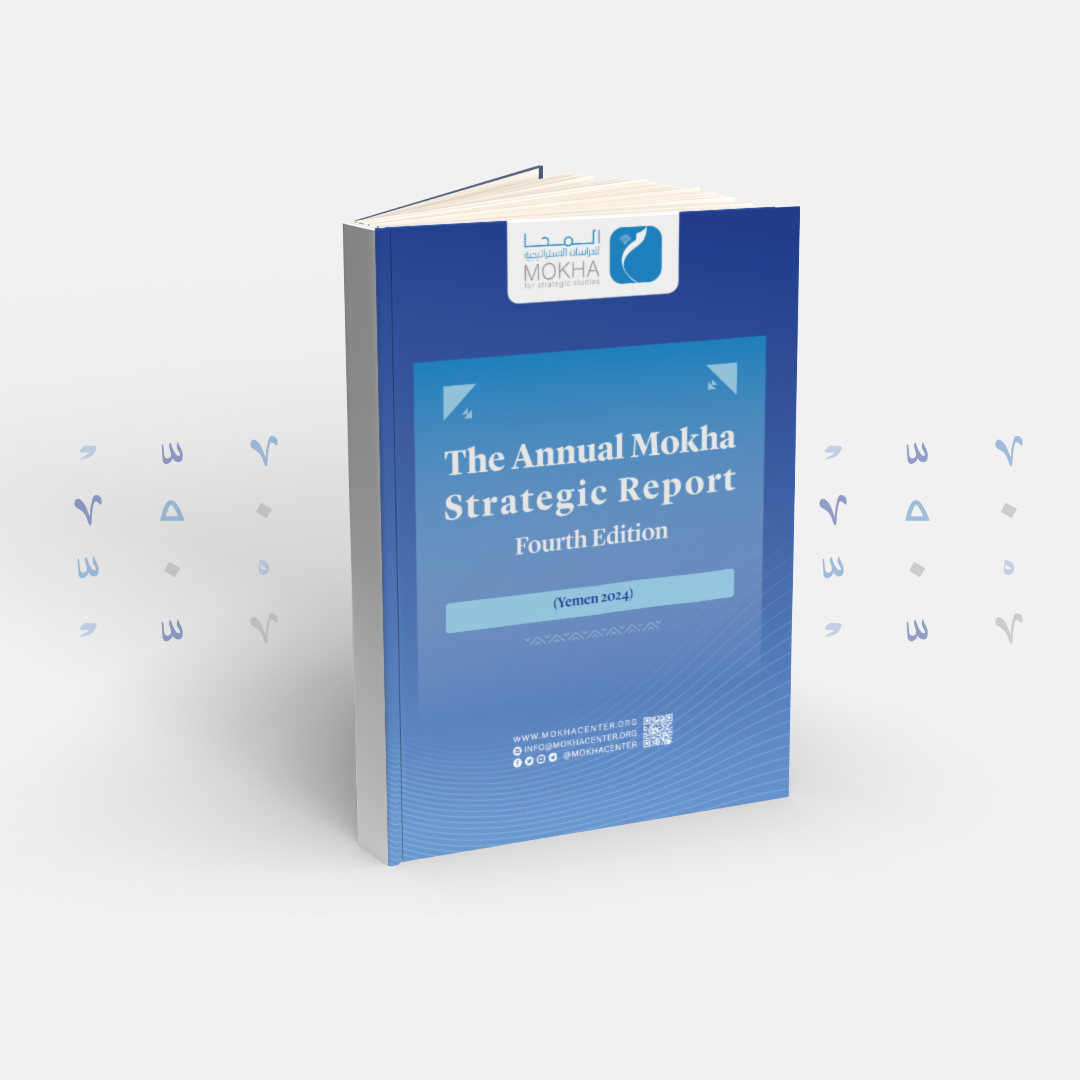
Mokha Center for Strategic Studies Releases Its Fourth Annual Strategic Report on Yemen
The Mokha Center for Strategic Studies has published its fourth annual report for 2024, providing a comprehensive and in-depth analysis of Yemen’s political, economic, security, and military developments, alongside critical issues related to human rights, development, and climate challenges.
The report aims to offer a clear perspective on Yemen’s current situation amid escalating challenges while forecasting potential future scenarios based on both domestic and regional dynamics.
Covering a wide range of pressing topics, the report examines political conditions and foreign relations, economic and sustainable development, military and security dynamics, humanitarian and human rights concerns, education and scientific research, societal identity shifts, public services, the status of women and children, environmental changes, and the media and cultural landscape.
The report, utilizing a precise analytical methodology grounded in reliable data, offers valuable insights into the trajectory of key developments in Yemen.
As a vital resource for policymakers, researchers, journalists, and observers of Yemeni affairs, it provides a comprehensive and well-contextualized assessment of the current landscape.
Political and Security Developments
The report highlights the ongoing political deadlock and internal divisions within the Presidential Leadership Council, which has struggled to maintain unity among its members. It also underscores escalating tensions between the government and the Southern Transitional Council, which continues to consolidate its control over Aden and other southern areas.
Regarding the Houthi group, the report notes its persistent efforts to expand regional influence through military escalations in the Red Sea, leveraging the rhetoric of the “Axis of Resistance” to bolster its standing both domestically and internationally.The report documents crackdowns and arrests targeting opposition figures, particularly those affiliated with civil society organizations.
Economic Challenges
The report highlights the continued dropping of the local currency and the increasing reliance on external financial support, particularly from Saudi Arabia, which has played a crucial role in preventing the government’s financial collapse. It also emphasizes the rising inflation and surging prices of essential goods, which have significantly impacted citizens’ livelihoods amid the absence of effective economic recovery measures.
Military and Security Situation
The report details the ongoing tensions between government forces and the Southern Transitional Council, with unfulfilled efforts to unify them. It also notes the intensification of Houthi attacks in the Red Sea, which have provoked international reactions and further complicated regional security. The report also highlights escalating security threats, including terrorist attacks, organized crime, and espionage, all of which pose serious risks to Yemen’s internal stability.
Humanitarian Crisis
The report reaffirms that Yemen remains one of the world’s most severe humanitarian crises, with deteriorating food security, widespread internal displacement, and extensive human rights violations, including arbitrary arrests, child recruitment, and media suppression.
Recommendations
The report concludes with several key recommendations, including:
• The urgent implementation of economic reforms to stabilize the currency and improve the business climate.
• Strengthening diplomatic efforts to overcome the ongoing political deadlock.
• Unifying security and military forces to effectively address persistent challenges.
• Enhancing humanitarian responses to alleviate worsening food and health crises.