After the Dissolution of the Southern Transitional Council
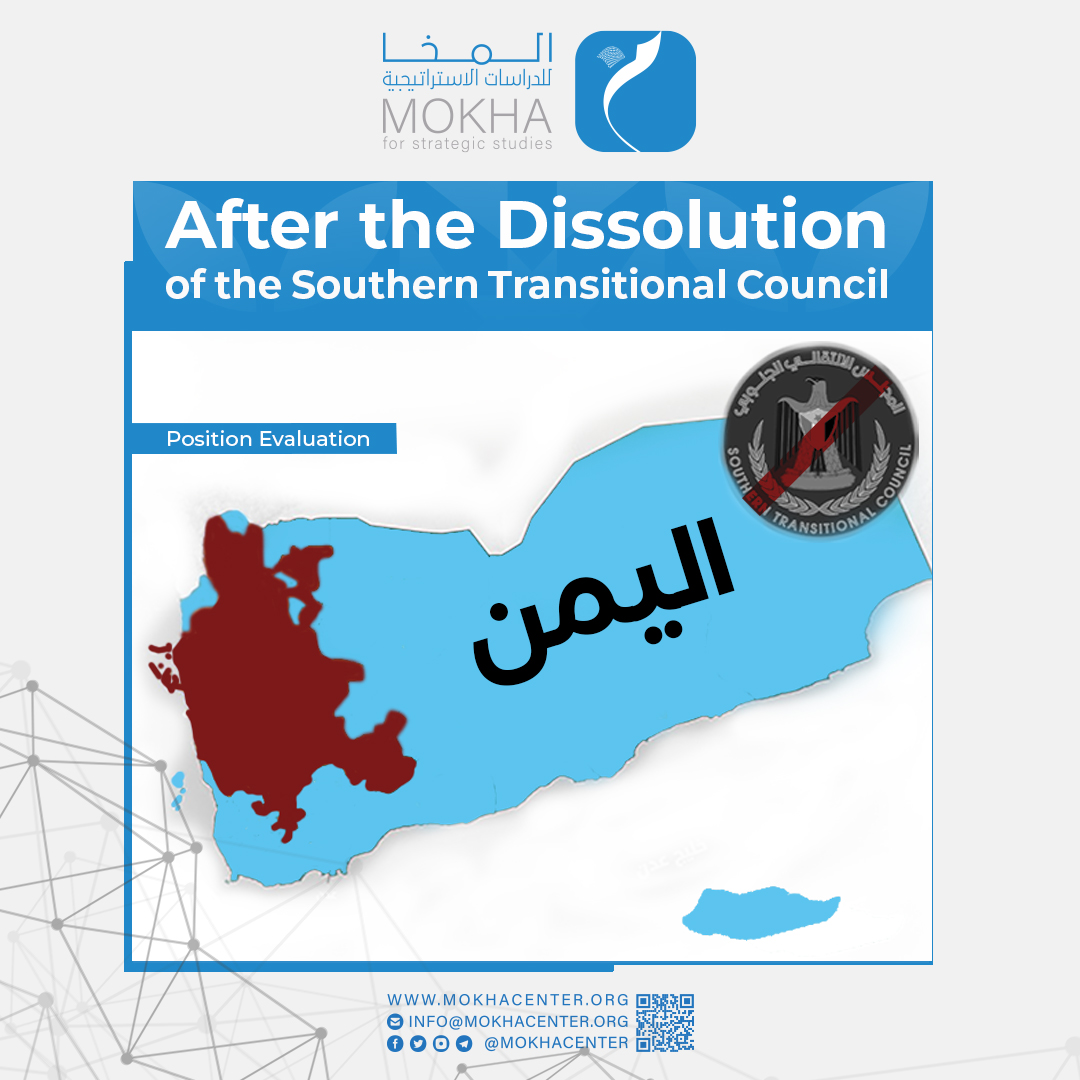
The announcement of the dissolution of the Southern Transitional Council marked a pivotal moment for Yemen and the wider region, closing a chapter of conflict that had defined the “liberated areas” over the past eight years. That period was characterized by the Emirati-backed STC’s dominance over several Yemeni governorates and the construction of a parallel military, political, and economic order alongside the internationally recognized government.
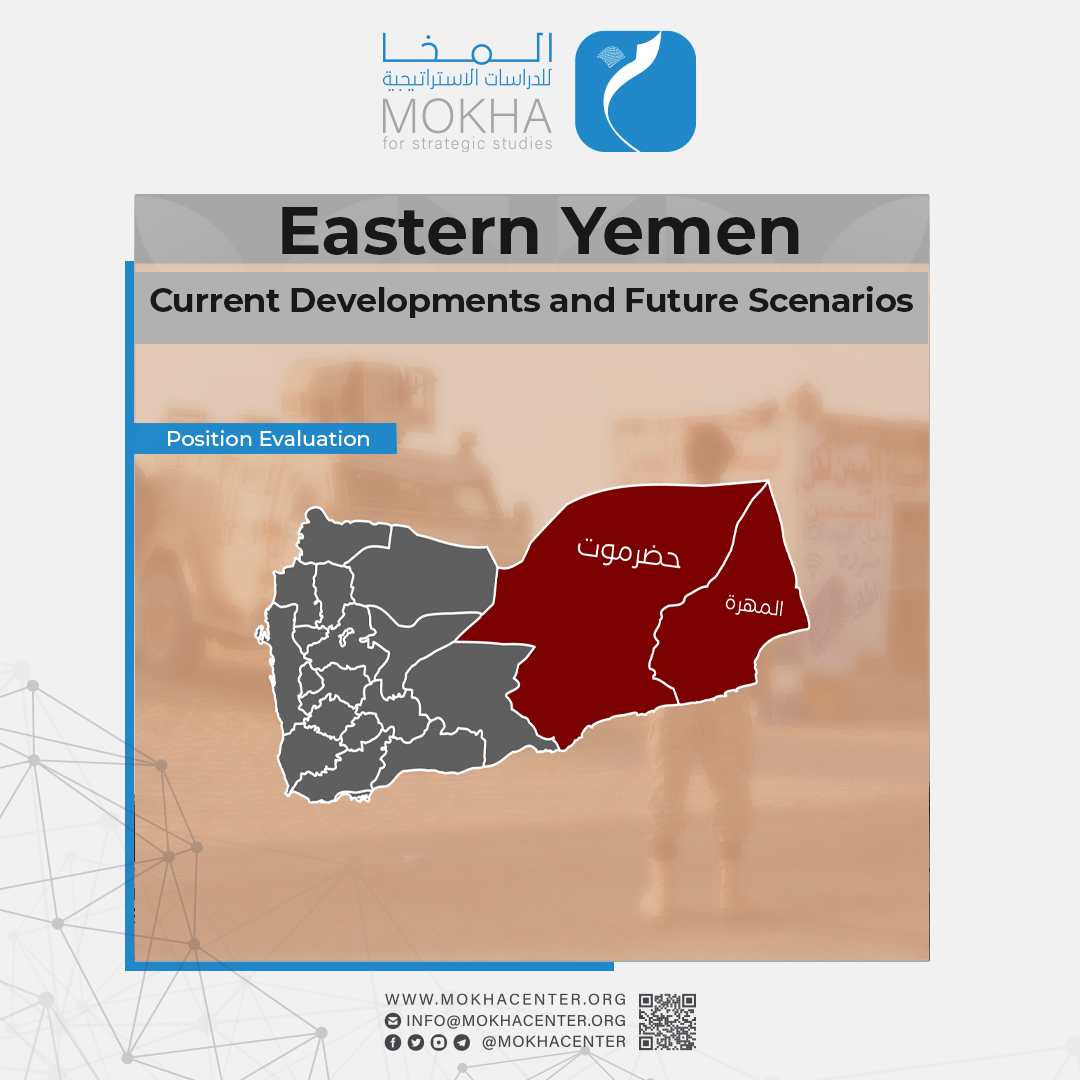
The STC’s takeover of Hadhramaut stands out as one of the most consequential developments shaping local, regional, and international positions. Losing Hadhramaut would mean losing more than one-third of Yemen’s territory, along with its vast oil and maritime wealth. Control of the governorate by the STC would further weaken the internationally recognized government and could ultimately hollow it out of any meaningful authority.
In response, the internationally recognized government rejected the STC’s moves and launched a military campaign—backed by the Arab Coalition—to retake the camps and positions seized by STC forces. President Rashad al-Alimi, Chairman of the Presidential Leadership Council, also issued a decision annulling the joint defense agreement with the United Arab Emirates and calling on Abu Dhabi to withdraw from Yemen within 24 hours. This was followed by the removal of STC forces from Hadhramaut and Al-Mahra in eastern Yemen, the formal dissolution of the Southern Transitional Council, and the dismissal of a number of civilian and military figures involved in the rebellion, including the removal of STC leader Aidarous al-Zubaidi from the Presidential Leadership Council.
This assessment examines Yemen’s future after the dissolution of the STC by analyzing the political, economic, and military implications for Yemen and the wider region, identifying the key determinants of the coming phase, and mapping out the most likely future scenarios.
Local and Regional Implications Following the Dissolution of the Southern Transitional Council
- Domestic Implications
In recent years, the presence of the internationally recognized Yemeni government has been weak compared to that of unofficial armed formations particularly the forces of the Southern Transitional Council (STC). At present, however, a favorable opportunity appears to exist to reassert state authority in the liberated governorates by restructuring armed formations under the Ministries of Defense and Interior, filling the political and security vacuum, protecting national resources, reorganizing state institutions, and unifying political and military discourse in the liberated areas. The dismissal of several civilian and military officials involved in the rebellion is expected to contribute to this process. It is also anticipated that the Presidential Leadership Council and the government will undergo restructuring, alongside the resumption of parliamentary sessions.
At the same time, there are concerns that some STC-affiliated political and military leaders may turn toward chaos, or attempt to hold on to the remaining areas still under their control—particularly if they realize that any forthcoming settlement will diminish their political and military influence. Unless these forces are restructured and their weapons handed over to the state, renewed conflict is likely, leading to the exhaustion of all parties through open-ended confrontations, the re-emergence of new secessionist projects, and the possibility that the Houthis will exploit these divisions to launch attacks on the liberated areas.
- Regional and International Implications
Regional and international interests in Yemen are deeply intertwined due to the country’s geostrategic position overlooking key energy routes and maritime corridors. The Gulf states view Yemen as an extension of their national security, believing that any deterioration of stability in Yemen would directly affect Gulf security. Saudi Arabia, in particular, has deep political, social, and economic ties with Hadhramaut and rejects the control of Emirati-backed forces over the governorate. The decision to expel the UAE from Yemen appears to have stemmed from Abu Dhabi’s breach of Gulf understandings regarding the Yemen file in general and Hadhramaut in particular, as well as from broader Saudi-Emirati competition.
Oman, for its part, seeks to secure its southern borders and preserve a diplomatic balance that prevents any unofficial military presence—especially Emirati—from threatening its stability. Qatar and Kuwait remain committed to supporting Yemeni sovereignty and unity and to backing the internationally recognized government, while rejecting any unilateral moves that attempt to impose a new political reality outside a consensual framework.
At the broader regional level, the Middle East is experiencing a political vacuum resulting from Iran’s relative retreat, the narrowing of Egyptian and Saudi roles, and the inward turn of major global powers toward other priorities. In this context, the UAE has sought to expand its external influence, benefiting from its advanced relationship with Israel and their shared support for secessionist movements across the region. This has raised concerns in Saudi Arabia, Türkiye, and Egypt, potentially pushing them toward building new understandings on Yemen and other regional files to restore the disrupted balance of power.
From a regional and international security perspective, instability in Yemen raises serious concerns over smuggling, terrorism, and threats to international shipping in the Red Sea, which would negatively impact energy prices and UN-led peace efforts. Accordingly, intense international pressure—particularly from the United States and Europe—is expected to push toward de-escalation. Washington, in particular, seeks to maintain balanced relations with both Riyadh and Abu Dhabi, avoid siding with one against the other, and prevent further escalation that could endanger global strategic interests.
Determinants Shaping Yemen’s Future after the STC’s Dissolution
The future of Yemen is shaped by three key determinants that are expected to play a decisive role in defining how events will unfold in the coming period:
- The ability of the legitimate government to extend its authority over the liberated areas
This depends on its success in restructuring armed formations, asserting control over state resources, and reactivating the Yemeni Parliament. If the government succeeds in advancing these files, this will have a positive impact on the overall political, military, security, and economic environment. Any failure or retreat, however, would negatively affect all these dimensions.
- Saudi Arabia’s ability to establish a sustainable success model in Yemen
The withdrawal of the UAE has placed the burden of responsibility squarely on Saudi Arabia. The Kingdom is now expected to build a positive and credible model in Yemen through which it can project a constructive regional role. Saudi Arabia’s willingness to host the Southern Conference reflects this direction. Any failure to realize this model would undermine the positive image Saudi Arabia has built in recent years and would also affect the future trajectory of the conflict in Yemen.
- The U.S. position
The United States continues to maintain a balance between its two key regional allies, Saudi Arabia and the UAE, while expressing concern that escalation could undermine counterterrorism efforts and facilitate a reconfiguration of Houthi power in Yemen. For this reason, Washington prioritizes dialogue and de-escalation and seeks to preserve a balanced stance in the conflict.
However, a shift in the U.S. position in favor of the UAE cannot be ruled out, driven by the growing influence of the Israeli lobby in the United States and its close alignment with the Emirati lobby, as well as Abu Dhabi’s ability to leverage the terrorism file in support of its broader strategic agenda.
Future Scenarios after the Dissolution of the Southern Transitional Council
First scenario: Broad-Powers Local Governance
This scenario assumes that the internationally recognized government succeeds in extending its authority over the liberated governorates, and that the Riyadh consultations succeed in supporting the idea of granting broad local governance powers to some of these areas, while postponing a final decision on the overall structure of the state to a later stage, as it remains linked to a comprehensive settlement of the Yemeni file.
This scenario is reinforced by the government’s desire to build successful governance models in the liberated areas, as well as by the pledges of Presidential Leadership Council Chairman Rashad al-Alimi that Hadhramaut will be granted full self-administration. It is also strengthened by the strong attachment of Hadhrami communities to this option, as they have become a key factor in the current political shifts.
However, this scenario is weakened by the lack of a sufficiently supportive political environment for its implementation, since it requires a relatively advanced level of institutional capacity and stability. It is also constrained by the state’s heavy reliance on oil revenues in its current budget—most of which come from Hadhramaut—making the central government reluctant to devolve too much fiscal and administrative control.
Second scenario: A Comprehensive Settlement
This scenario assumes that the Riyadh consultations succeed in producing a new consensus-based settlement on the southern issue, supported by all major forces, and that this, in turn, encourages the launch of renewed negotiations with the Houthis leading to a comprehensive political settlement.
This scenario is supported by Saudi Arabia’s desire to initiate broad Yemeni consultations following the southern talks, as well as by the internationally recognized government’s use of the military option as leverage, which could push the Houthis toward tactical engagement with the process. However, the prospects of this scenario are constrained by the ambitions of STC-affiliated armed formations to regain the initiative and by the risk of fragmentation within the camp of the internationally recognized government.
Third scenario: Renewed Fragmentation and Disorder
This scenario assumes a return to instability driven by the insistence of some STC leaders on pursuing secession. It is reinforced by the continued control of Security Belt forces loyal to the STC over parts of Aden, Lahj, Abyan, and Al-Dhalea, as well as by the retention of heavy weapons by STC-aligned units. The likelihood of this scenario would increase if military integration efforts fail and if the government proves unable to assert its authority across the liberated areas.
This scenario, however, is weakened by Saudi Arabia’s strong desire to establish a successful and stabilizing model in Yemen.
Conclusion
The dissolution of the Southern Transitional Council marks the beginning of a new phase in which local power balances are being reconfigured and Yemen’s relationship with the regional and international environment is likely to change accordingly. The most probable outcome appears to be the “broad-powers local governance” model—although it is likely to be applied only in some liberated governorates rather than across the entire country, such as Hadhramaut and possibly Taiz, as pilot cases to test its viability.
There is both domestic and regional resistance to the idea of secession, at least in the short to medium term. Overall, the success of this new phase remains contingent on the seriousness of regional actors in supporting state institutions, overcoming the drivers of past crises, and Saudi Arabia’s ability to play an advanced and effective political role in managing the Yemen file.